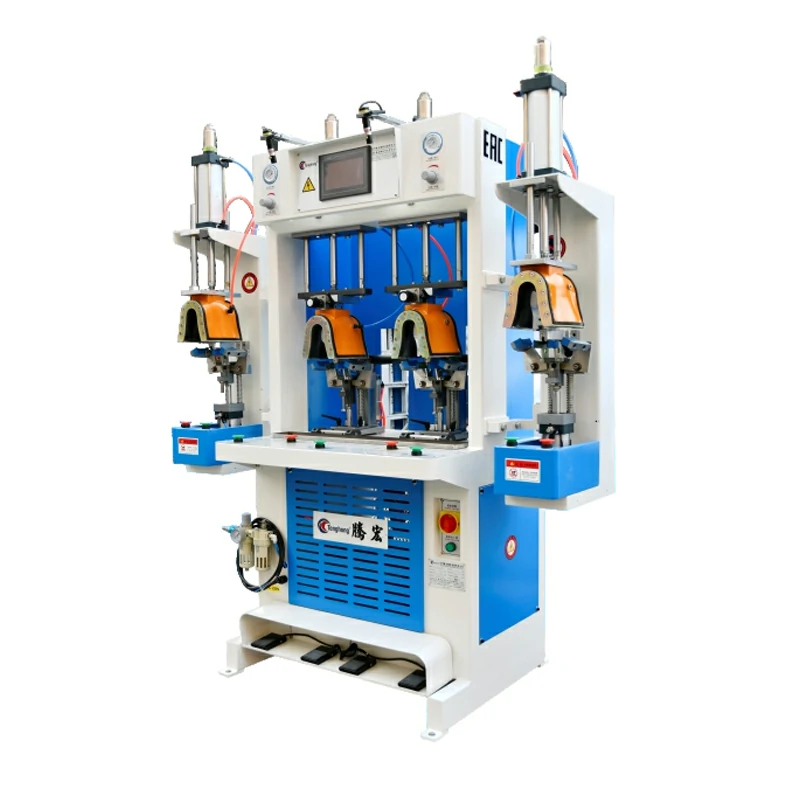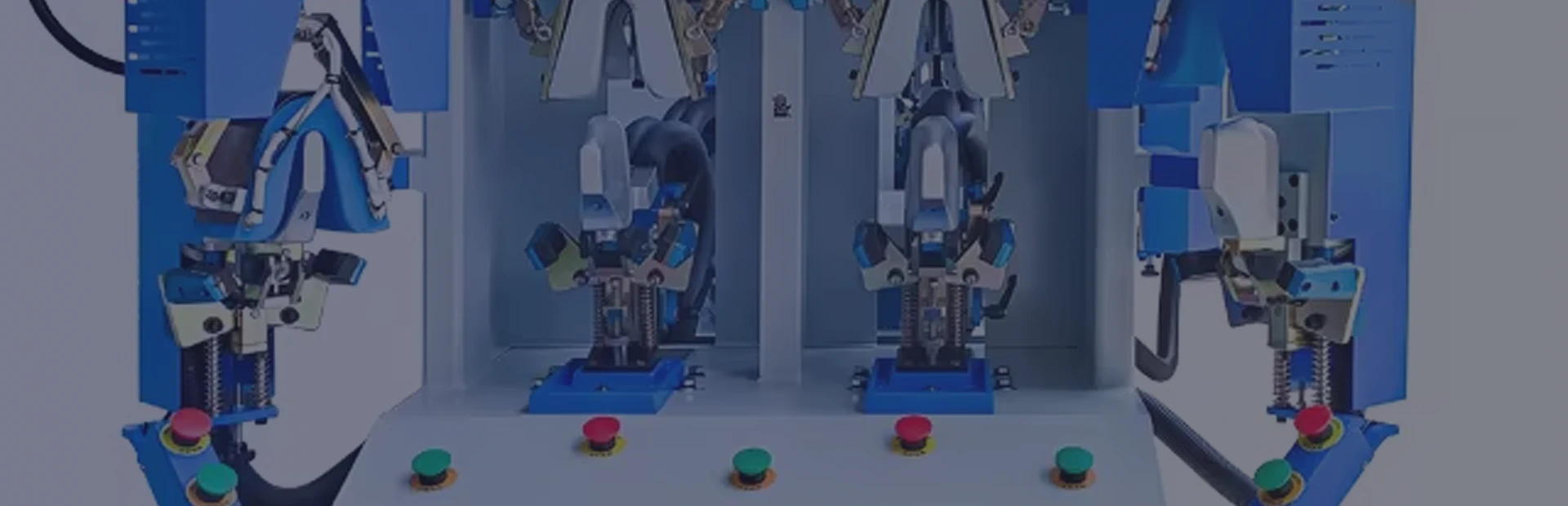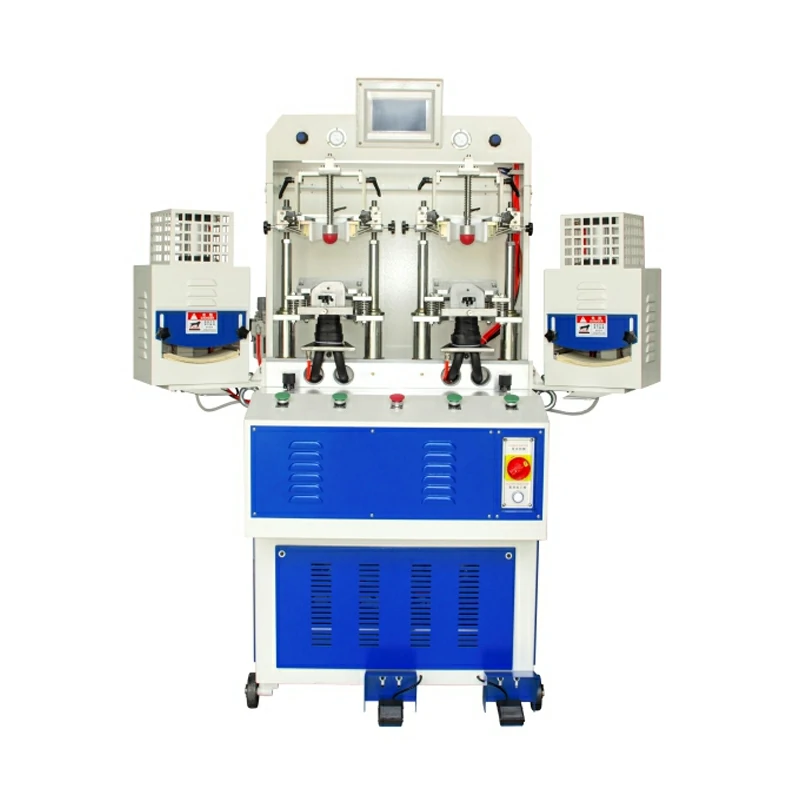
In toe lasting, cementing is the step that bonds the upper to the insole forepart before the toe is pulled and formed into its final shape. The core difference between automatic cementing and manual cementing is how the adhesive is applied and controlled. An automatic system lays glue along a programmed path with controlled volume and temperature, while manual cementing depends on an operator brushing or spraying adhesive by hand. For most production programs, automatic cementing delivers more consistent adhesion, less glue waste, and fewer defects such as overflow or delamination. Manual cementing still makes sense for very low volumes, prototyping, and operations working with a tight upfront budget. This article compares how each method works, where each performs best, and what to check when you evaluate a toe lasting machine cementing system.
What Cementing Does in the Toe Lasting Process
Toe lasting is the operation that pulls the upper over the front of the last so the toe cap takes its final contour. Before the pincers grip and draw the material into place, a thin, even layer of adhesive must already be present on the insole forepart or the corresponding upper margin. That bond is what holds the upper against the insole during forming and, just as importantly, what keeps it there for the life of the shoe.
Why Adhesion at the Toe Matters
The toe is the part of the shoe that undergoes the most aggressive pulling force during lasting. If the cement film is uneven, too heavy, or too light, the result shows up as wrinkles, bridging, or a loose toe that fails quality control. In a footwear production line, a weak toe bond is also one of the most common causes of downstream delamination after the sole is attached. Cementing is therefore not a minor prep step — it sets the ceiling on the quality the rest of the process can reach.
Manual Cementing in Toe Lasting — How It Works
Manual cementing is the traditional approach, still found on older lasting setups and on semi-automatic lines where the operator handles glue application separately from the forming cycle. The worker applies adhesive with a brush, roller, or spray gun, following the insole edge or the upper margin by eye and feel.
Typical Manual Cementing Steps
- Select the adhesive and thin it or heat it to a workable state, if required by the material.
- Apply glue along the insole forepart or the upper binding area by hand.
- Visually check coverage and correct any missed spots before lasting.
- Wait for the appropriate open time, then run the toe lasting cycle.
- Re-inspect the toe for overflow stains or dry, poorly bonded areas.
Where Manual Cementing Struggles
The quality of manual cementing rises and falls with operator skill, concentration, and fatigue. Because glue volume and temperature are not actively controlled, the same operator can produce different results across a shift. Common problems include glue overflow that stains the upper, glue shortage that leads to delamination, and slow, hard-to-repeat application when shoe sizes change. For low and irregular volumes these trade-offs are often acceptable; at scale they become a bottleneck.
Automatic Cementing in Toe Lasting — How It Works
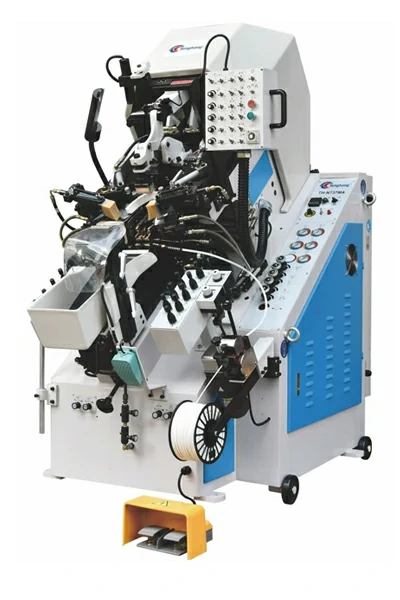
On a modern automatic toe lasting machine, cementing is built into the same controlled cycle as pulling and forming. Instead of an operator judging coverage, the machine plans and executes the glue path itself. The capabilities below reflect the precision cementing technology built into current TENGHONG toe lasting machines.
Trajectory Tracking and Path Planning
Using a PLC control system paired with servo drive technology, the machine traces the edge of the insole based on shoe size and type and automatically plans the cementing path. The glue follows the actual geometry of the part rather than a fixed hand motion, which is what keeps coverage even across pointed, square, or asymmetrical toe shapes.
Dosage and Temperature Control
Automatic cementing controls glue volume and temperature precisely. That directly addresses the two failure modes of manual work: it avoids glue overflow that would stain the upper, and it avoids glue shortage that would cause delamination. Consistent dosage also means consistent material cost per pair.
PLC, Servo Drive, and Memory Functions
The control system acts as the “brain” of the machine, paired with a touchscreen where operators input parameters digitally. Because settings for hundreds or even thousands of shoe styles can be stored, a production line can switch styles and recall the correct cementing and pulling parameters with a single key — eliminating the slow mechanical re-adjustment older machines require.
Visual Recognition and Low-Manpower Operation
The most advanced toe lasting equipment integrates a visual recognition system using cameras. The system identifies last size, left/right orientation, and the positional deviation of the upper on the last, then automatically determines the cementing trajectory. This moves the operation toward “unmanned” or “low-manpower” running, where the operator supervises rather than applies glue by hand.
Automatic vs Manual Cementing — A Direct Comparison
| Aspect | Automatic Cementing | Manual Cementing |
|---|---|---|
| Control method | PLC and servo-driven, programmed path | Operator brush, roller, or spray by hand |
| Glue consistency | Even volume and temperature each cycle | Varies with skill and fatigue |
| Labor requirement | Low after setup; supervisory role | Continuous operator attention |
| Changeover between sizes | Recipe recall, minimal manual adjustment | Manual re-application per style |
| Defect risk (overflow / shortage) | Low, controlled by dosage settings | Higher, depends on human judgment |
| Best production volume | Medium to high, repeat runs | Very low volume, samples, prototypes |
| Upfront investment | Higher equipment cost | Lower equipment cost |
| Repeatability | High across shifts and styles | Difficult to hold exactly |
Which Cementing Method Fits Your Production?
Neither method is universally “better.” The right choice follows from your volume, your quality targets, and how often your style mix changes.
Choose Manual Cementing When…
- Your output is very low or highly irregular from week to week.
- You primarily make samples, prototypes, or custom single pairs.
- Your toe shapes are simple and your quality bar is forgiving.
- Your priority is the lowest possible upfront equipment spend.
Choose Automatic Cementing When…
- You run repeat production where consistent adhesion is a hard requirement.
- Glue waste and per-pair material cost must be controlled.
- You want to reduce reliance on operator skill for a repeatable process.
- Your line changes shoe styles often and needs fast, reliable changeover.
Quality Risks to Watch — Overflow, Shortage, and Delamination
Three defects dominate cementing problems at the toe. Overflow happens when too much adhesive is applied and squeezes past the margin, staining the upper and creating a visible line. Shortage happens when too little is applied, leaving the upper under-bonded. Both feed the same outcome: delamination, where the upper separates from the insole or, later, from the sole. Automatic dosage and temperature control reduce all three by holding the application window steady instead of leaving it to chance.
How to Evaluate a Toe Lasting Machine’s Cementing System
When you compare machines, the cementing subsystem deserves the same attention as the pincer arrangement. Ask the supplier to demonstrate, not just describe, each capability, and tie the answers back to the shoe types and materials you actually run.
Questions to Ask a Supplier
- Does the machine perform trajectory tracking, or does it apply glue on a fixed pattern?
- What is the controllable range for glue dosage and temperature, and how is it set per style?
- How many shoe-style recipes can be stored, and how fast is changeover between them?
- Is visual recognition available, and what does it actually detect (size, left/right, upper deviation)?
- Which adhesive types and upper materials has the system been validated with?
- What training, documentation, and after-sales support are provided for the cementing function?
When you request a quotation, share your real technical requirements: target shoe types, size range, adhesive specification, acceptable tolerance on bond width, and expected production volume. A capable toe lasting machine manufacturer or supplier should be able to map those requirements to a concrete configuration rather than offering a one-size-fits-all answer.
Matching Cementing to Your Shoe Program
Different footwear places different demands on the toe bond. Children’s shoes and simple women’s fashion styles tolerate a wider process window, which is why leaner setups can still succeed there. Men’s leather, athletic, safety, and structured footwear need tighter, wrinkle-free forming, and the consistent adhesive film from automatic cementing supports that finish. For OEM and custom programs where every pair must match an approved sample, recipe storage and repeatability become decisive advantages over hand application.
Frequently Asked Questions
What is cementing in toe lasting?
Cementing is the application of adhesive to the insole forepart or upper margin before the toe is pulled and formed. It creates the bond that holds the upper in place during lasting and through the shoe’s service life.
Does automatic cementing remove the operator entirely?
Not usually. On most lines the operator loads, supervises, and handles exceptions, while the machine controls the glue path, volume, and temperature. Advanced systems with visual recognition move closer to low-manpower running but still need oversight.
Can automatic cementing handle different shoe sizes and materials?
Yes, when the machine uses trajectory tracking and stored style recipes. Because parameters are planned from shoe size and type, the same system can cover children’s through large men’s sizes and switch between materials using the correct recipe.
What causes glue overflow and delamination at the toe?
Overflow comes from applying too much adhesive, which stains the upper; delamination comes from too little, which leaves the upper under-bonded. Both are reduced by precise dosage and temperature control rather than manual judgment.
Is manual cementing still used in modern shoe factories?
Yes, mainly for very low volumes, prototyping, and custom single pairs where the speed and consistency of automation do not justify the setup. High-volume and quality-critical lines increasingly adopt automatic cementing.
What should I specify when requesting a quote for a toe lasting machine?
Share your shoe types, size range, adhesive specification, required bond tolerance, target output, and how often styles change. Those details let a supplier recommend the right pincer and cementing configuration instead of a generic model.
Conclusion
Automatic and manual cementing solve the same problem — bonding the upper to the insole at the toe — but they do it with very different consistency, labor, and cost profiles. Manual cementing stays useful for samples and tiny runs; automatic cementing earns its place wherever adhesion must be repeatable, glue waste must be controlled, and changeover must be fast. When you evaluate a cementing toe lasting process, look closely at trajectory tracking, dosage and temperature control, recipe storage, and supplier support. To see how these capabilities are built into a production-ready machine, review the TENGHONG toe lasting machine and contact the team with your specific shoe program and technical requirements.