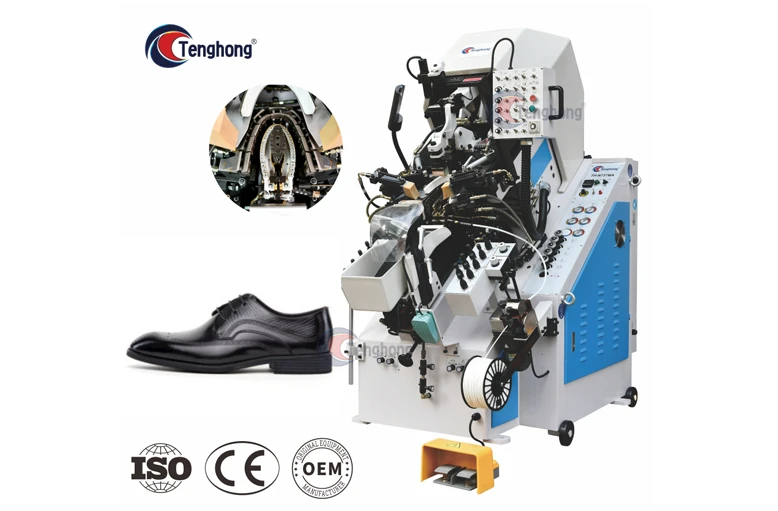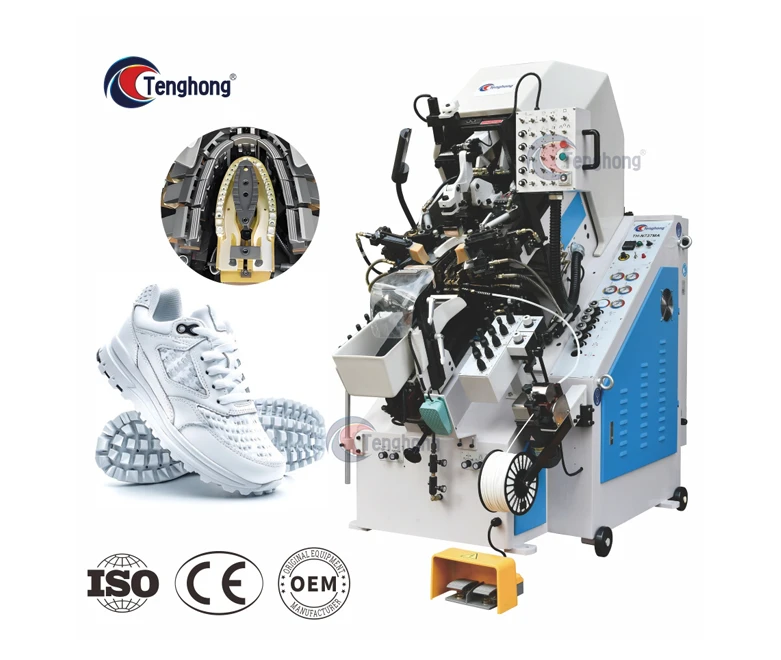
Investing in an automatic toe lasting machine yields a positive return on investment when the combined savings in direct labor, material scrap, and rework outweigh the capital depreciation and operating costs of the new equipment. For mid-to-large footwear production lines, this transition typically breaks even within 12 to 24 months, depending on local wage rates, daily pair output, and shift patterns.
The decision centers on two opposing financial vectors: immediate reduction in labor overhead versus the multi-year amortization schedule of the machine. Evaluating this capital expenditure (CapEx) requires looking beyond the purchase price to calculate labor headcount replacement, rework reduction, energy draw, maintenance consumables, and tooling changeover flexibility.
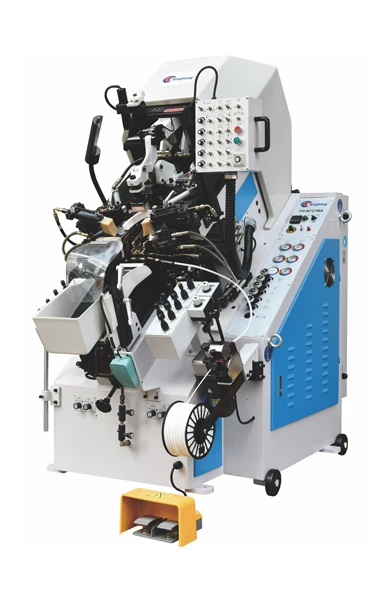
The Capex Dilemma: Is Upgrading to an Automatic Toe Lasting Machine Financially Justifiable?
Toe lasting is one of the most labor-intensive and technically demanding stages in footwear assembly. The operator must position the shoe upper over the last, secure proper alignment, and actuate pincer pulling and hot-melt cement injection without inducing surface wrinkles or distorting the feather line. In manual and semi-automatic setups, line throughput depends directly on operator skill, making the workstation vulnerable to operator fatigue, attendance fluctuations, and rising shop-floor wages.
Transitioning to an automated station changes the cost structure:
- Shifting Variable Cost to Fixed Asset Base: Fixed capital equipment with predictable depreciation schedules replaces unpredictable, recurring labor costs.
- Standardizing Cycle Times: Mechanical and hydraulic sequence timers set the pace of the assembly line rather than individual operator stamina.
- Mitigating Skilled Labor Shortages: Modern systems with micro-electronic program storage allow operators with basic technical training to run complex lasting profiles.
Footwear manufacturers assessing capital allocation must balance these advantages against upfront cash outflows. Integrating a modern toe lasting machine requires an accounting approach that weighs real shop-floor savings against systematic equipment amortization.
Labor Savings Breakdown: What Factories Actually Save per Shift
Calculating labor savings requires separating direct payroll reductions from indirect quality savings. Both contribute directly to working capital recovery.
Direct Headcount Reduction and Wage Optimization
A manual lasting line often requires two to three operators per station to handle initial pulling, manual tacking, cementing, and edge smoothing. By contrast, an automated system performs upper gripping, tension drafting, adhesive application, and wiper plate wiping in a single continuous cycle.
- Headcount Consolidation: A single machine typically consolidates operations, reducing the labor requirement to one operator per line. Over a two-shift operating model, this reallocates two to four full-time technicians.
- Overtime Elimination: Consistent cycle times prevent bottlenecks at the lasting station, reducing downstream overtime across the sole bonding and finishing lines.
- Training and Turnover Dampening: High turnover among experienced manual lasters incurs recurring onboarding costs. Automated lasting sequences reduce training lead times from months to days.
Eliminating Rework, Material Scrap, and Pucker Defects
Labor savings extend into material recovery. When manual lasting tension is uneven, the shoe upper suffers from asymmetrical vamp alignment, puckering around the toe cap, or adhesive bleed. Defective shoes must either be stripped down manually—wasting solvent, upper materials, and labor—or downgraded to secondary sales channels.
Automated lasting machines use multi-point independent pincers and programmable wiper stroke depths. Maintaining uniform mechanical tension across every batch reduces lasting-related rework to negligible levels. In high-material-cost footwear segments, such as full-grain leather dress shoes or technical waterproof boots, saving 1% to 3% in scrapped materials per batch matches or exceeds the value of direct hourly wage savings.
| Evaluation Metric | Manual / Conventional Setup | Automatic Toe Lasting Machine Setup | Financial Impact on Factory |
| Operators per Shift | 2–3 skilled technicians per line | 1 trained operator | Direct payroll and benefits reduction |
| Cycle Consistency | Operator-dependent (fluctuates hourly) | Controlled mechanical sequence | Stable throughput and predictable daily yields |
| Lasting Defect Rates | 2.5% – 5.0% (variable tension/wrinkling) | Below 1.0% under calibrated settings | Substantial savings in upper materials and rework labor |
| Operator Training Curve | 6–12 months for high-precision styles | Several days for parameter selection | Lower hiring and retention vulnerability |
Understanding Equipment Amortization and Total Cost of Ownership (TCO)
Evaluating equipment amortization involves tracking total cost of ownership (TCO) over the machine’s usable lifespan, rather than looking at invoice price alone.
Calculating Depreciation: Standard Timelines and Per-Pair Amortization
Industrial shoe machinery is commonly amortized over a 5-to-10-year depreciation schedule, using straight-line accounting for tax and operational modeling.
To determine the equipment cost per shoe pair:
$$\text{Amortization per Pair} = \frac{\text{Delivered Machine Cost} – \text{Estimated Residual Value}}{\text{Amortization Lifespan (Years)} \times \text{Annual Production Output (Pairs)}}$$
For an automated unit producing between 1,200 and 2,000 pairs per day on a single line, the equipment depreciation burden drops to fractions of a cent per pair. Even with conservative production estimates, equipment amortization represents a small fraction of the direct labor cost required to last the same pair manually.
Operating Overheads: Energy, Pneumatic Air, and Wear-and-Tear Parts
A complete TCO model must account for ongoing operational expenses:
- Electrical and Hydraulic Energy Consumption: Continuous-duty hydraulic pumps and heating elements for hot-melt glue draw measurable power. Selecting units equipped with energy-efficient motors or on-demand hydraulic flow limits power overhead.
- Pneumatic Requirements: Pneumatic systems demand clean, dry compressed air. Pressure drops or wet air accelerate valve wear, requiring maintenance of filtration systems.
- Wear Consumables: Wipers, pincer teeth, Teflon bands, and silicone toe bands degrade through friction and thermal cycling. Factories should budget for scheduled parts replacement to prevent unplanned downtime.
Factoring in proper maintenance, the robust structural engineering found in Tenghong toe lasting machine models protects internal mechanical alignment against heavy hydraulic shock, maintaining low spare-part consumption over multi-year production runs.
The Payback Calculation: Step-by-Step Decision Framework
Factory financial controllers can follow a structured 3-stage framework to calculate payback timelines and establish their operational break-even threshold.
| Stage | Process Phase | Calculation Components & Variables | Operational Objective |
| Step 1 | Determine Net CapEx | Delivered Machine Invoice Price + Shipping & Freight + Import Tariffs + Facility Installation & Crew Training | Establish the total initial cash outlay required to bring the machine to fully operational status. |
| Step 2 | Calculate Annual Operational Gains | (Gross Wages Reallocated + Scrap & Material Rework Reduction)− (Annual Utility Power Draw + Routine Maintenance & Consumable Wear Parts) | Isolate the true recurring annual net cash flow added directly by the automated station. |
| Step 3 | Derive Simple Payback Period | Net CapEx (from Step 1) / Annual Net Gains (from Step 2) | Identify the exact break-even point in operational months or years. |
The Payback Period Formula
$$\text{Simple Payback Period (Years)} = \frac{\text{Net Initial Investment (CapEx)}}{\text{Annual Net Labor \& Scrap Savings} – \text{Annual Operational Costs}}$$
Where:
- Net Initial Investment = Machine purchase price + transport/import costs + physical installation and operator commissioning.
- Annual Net Savings = (Wages, insurance, and benefits of reallocated operators) + (Annual material cost saved from lower scrap rates).
- Annual Operational Costs = Electricity and air consumption + planned replacement consumables + regular maintenance.
Production Scenarios: Volume and Payback Dynamics
- Scenario A: High-Volume Standardized Footwear (Sneakers, Canvas, Basic Shoes)
- Characteristics: High daily output, consistent shoe lasts, minimal style changeovers.
- Financial Dynamic: The machine runs near peak operational capacity. Labor savings accumulate rapidly over hundreds of thousands of pairs, often driving the simple payback period below 12 months.
- Scenario B: High-Mix, Low-Volume or High-Value Footwear (Leather Boots, Formal Dress Shoes)
- Characteristics: Moderate daily pair volume, frequent last and pattern adjustments, expensive upper materials.
- Financial Dynamic: Direct labor hour savings are lower due to smaller run sizes, but material scrap reduction on high-grade leather provides immediate financial recovery. The payback typically falls within 14 to 22 months.
Non-Financial ROI: Brand Compliance, Safety, and Order Scalability
Beyond standard ledger accounting, upgrading to an automatic lasting station yields operational advantages that protect customer relationships and expand production capacity.
- Audit and Labor Compliance: International footwear brand buyers enforce strict social and safety compliance codes. Automated lasting workstations reduce ergonomic strain injuries caused by repetitive manual pulling, improving workplace safety audit scores.
- Consistent Quality for Tier-1 Contracts: Major brand contracts mandate tight aesthetic and dimensional tolerances. Automated systems eliminate human variation across shift changes, ensuring consistent feather-line curvature and symmetrical toe shapes.
- Surge Capacity for Peak Delivery Windows: During pre-holiday retail production rushes, scaling output with manual labor requires paying overtime premiums or hiring seasonal workers. Automated machines absorb increased demand simply by adding operating hours without sacrificing lasting precision.
Integrating industrial-grade automated equipment supports both commercial compliance and physical output stability, helping factories retain high-margin export orders.
Factory Evaluation Checklist: What to Verify Before Signing the PO
Before finalizing an equipment purchase order, engineering and procurement teams should audit supplier capabilities across these technical areas:
- [ ] Last and Style Compatibility: Confirm that the machine’s pincer layout, stroke dimensions, and wiper geometries accommodate the factory’s full size run and extreme toe profiles (e.g., pointed dress toes, broad safety shoes, or high-heel arches).
- [ ] Adhesive Delivery System: Verify whether the machine uses solid hot-melt rod, granular adhesive, or specialized cement, and verify heating cycle stability to avoid nozzle clogging.
- [ ] Changeover Times: Check how quickly the operator can swap pincer positions, toe bands, and wiper plates when transitioning between different shoe lasts.
- [ ] Component Standardization: Confirm that core electrical and pneumatic valves, PLCs, and hydraulic seals utilize standardized industrial specifications that can be sourced locally or delivered quickly by the vendor.
- [ ] Utility Requirements: Ensure the workshop supply of compressed air (flow rate and dry pressure) and three-phase electrical power matches the machine’s technical specifications.
For detailed equipment configurations, pneumatic parameters, and tooling specifications, review the engineering data on the toe lasting machine page before finalizing order requirements.
Key Takeaways
- Financial Feasibility: An automatic toe lasting machine moves labor costs from an escalating operational expense into a depreciable capital asset, typically amortizing over a 5-to-10-year operational lifespan.
- Payback Window: Most footwear production environments achieve break-even within 12 to 24 months through combined labor reassignment and reduced material scrap.
- Total Cost Considerations: Accurate ROI models must account for energy use, pneumatic supply quality, and regular wear-part cycles alongside the initial invoice price.
- Operational Protection: Automated lasting delivers strategic value beyond wage savings, including higher brand audit compliance, reduced ergonomic injuries, and the ability to scale volume during peak demand.
Frequently Asked Questions (FAQ)
What is the typical payback period for an automatic toe lasting machine?
In standard industrial shoe manufacturing environments, the payback period ranges between 12 and 24 months. Factories operating multiple shifts or working with high-cost leather uppers often break even faster due to higher aggregated wage savings and scrap elimination.
Can a single automatic toe lasting machine handle varied shoe styles without excessive re-tooling?
Yes, modern automatic lasting machines feature adjustable pincer groups, programmable wiper travel paths, and modular toe bands. Operators can switch between different lasts and style profiles by adjusting parameter presets and swapping dedicated wiper plates or bands.
What routine maintenance is required to prevent unexpected downtime?
Daily tasks include clearing residual hot-melt adhesive from nozzles, checking pneumatic air filter water traps, and lubricating mechanical slideways. Weekly inspections should focus on hydraulic oil levels, hydraulic line pressures, and checking pincer grip teeth for adhesive buildup or mechanical wear.
What baseline data does our engineering team need to run an accurate ROI calculation?
To project return on investment, your team needs: current daily production volume (pairs/day), the total loaded hourly cost of manual lasting operators (wages plus benefits), current lasting scrap and rework rates, utility power rates per kilowatt-hour, and the target machine’s delivered equipment cost.