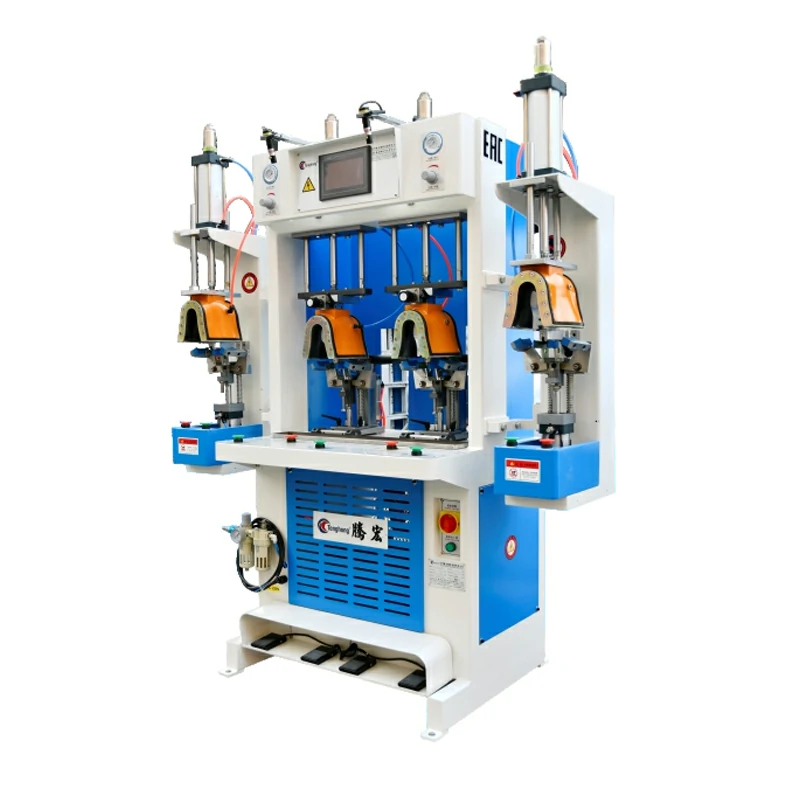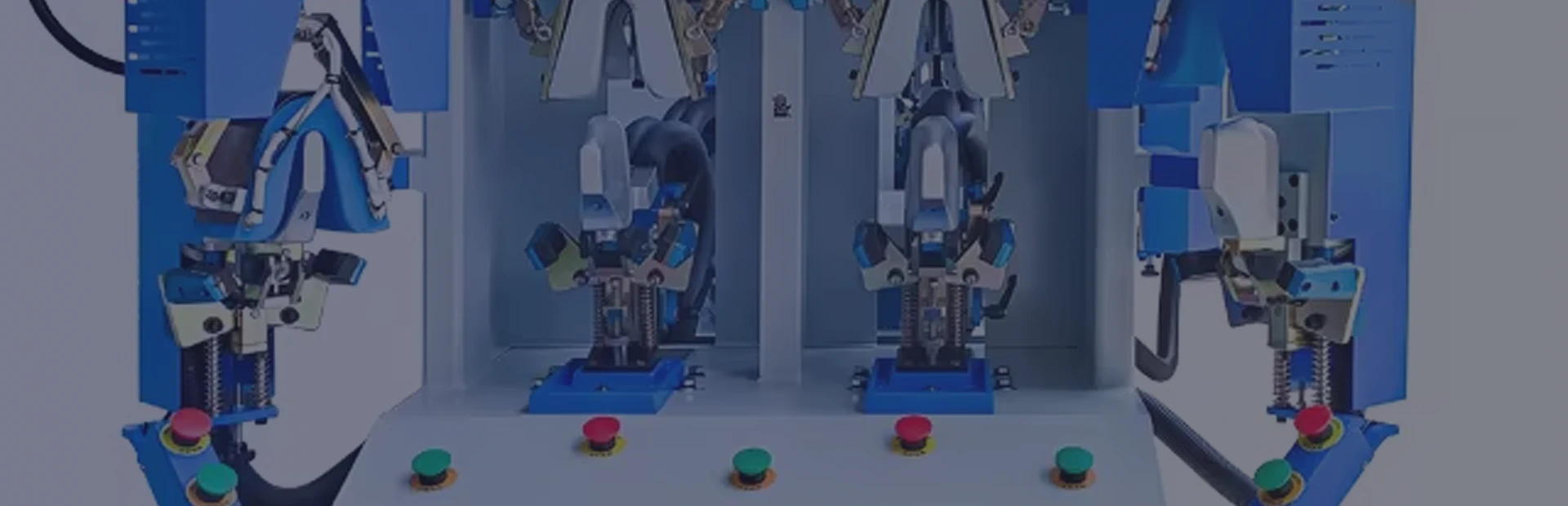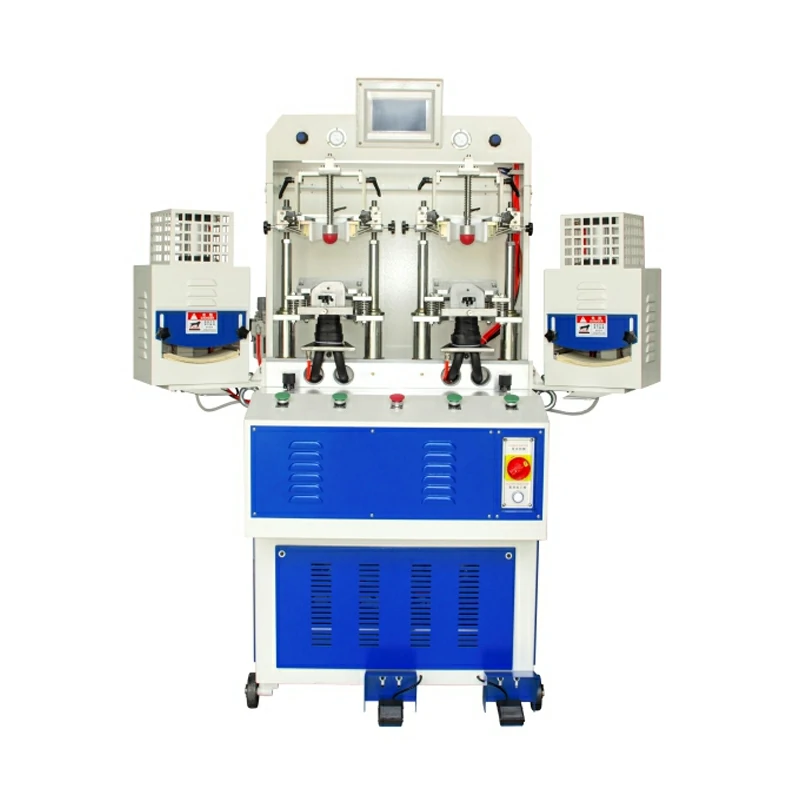
To start a shoe factory, you need a connected set of machines that cover every production stage: cutting (clicking) machines to shape the uppers, sewing machines to stitch the pieces, lasting machines (toe, heel-seat, and side) to form the shoe on the last, and sole attaching and pressing machines to bond the outsole — supported by moulding, roughing, and polishing equipment for finishing. Most new factories either buy these machines stage by stage or choose a complete production line matched to their shoe type and target output.
Equipment Checklist: What a Shoe Factory Needs
A shoe factory is built around the process flow rather than a single machine. The table below lists the core equipment groups and what each one contributes to the finished shoe.
| Production stage | Equipment needed | What it does |
|---|---|---|
| Cutting (clicking) | Hydraulic, swing-arm, traveling-head, and plane (beam) cutting machines | Cuts uppers, linings, and reinforcements to pattern |
| Stitching | Post-bed and roller-feed sewing machines; skiving machines | Sews pieces into a shaped upper; thins edges for clean seams |
| Lasting | Toe lasting, heel-seat lasting, and side lasting machines | Pulls the upper over the last and secures toe, heel, and sides |
| Sole attaching | Sole attaching and pressing machines | Bonds or molds the outsole to the lasted upper |
| Finishing | Moulding, roughing, and polishing machines | Shapes counters and toe boxes, prepares bonding surfaces, refines appearance |
1. Cutting Machines (Clicking)
Cutting is where material yield and panel accuracy are set, and a wrong panel cannot be recovered later. Shoe factories typically use hydraulic cutting machines that press a steel die through the material. Swing-arm models suit smaller panels and lower volumes, traveling-head models handle longer materials and bigger dies, and plane (beam) machines cover wide, multi-layer cutting for higher output.
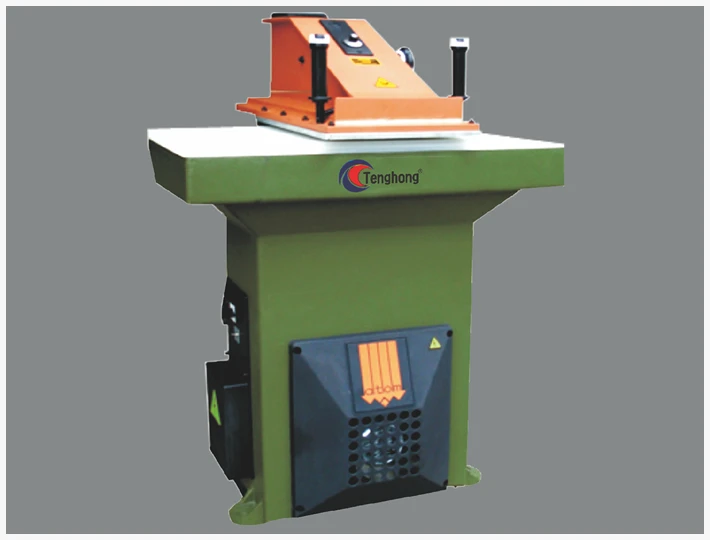
When specifying cutting equipment, the variables that matter are cutting-force consistency across the bed, die-change time between styles, and how cleanly the machine handles multi-layer leather or synthetic stacks. Force that varies across the bed produces panels of slightly different size, which then causes alignment problems at stitching.
2. Stitching and Skiving Machines
Once panels are cut, the upper is assembled by sewing. A shoe stitching machine for footwear is usually a post-bed or roller-feed sewing machine built for curved seams, multiple material thicknesses, and reinforced threads. Skiving machines thin the edges before sewing so seams lie flat and the lasting stage has less bulk to pull over the last.
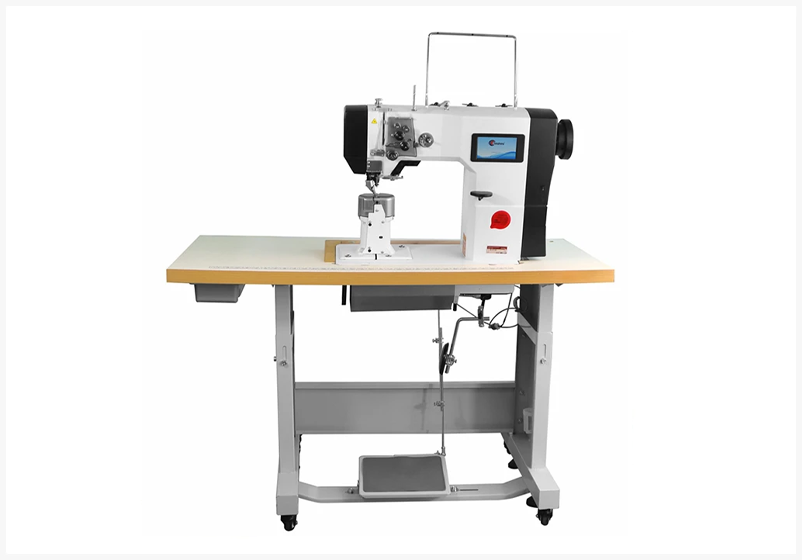
Different shoe types place different loads on stitching: a safety shoe needs reinforced seams at stress points, while a dress shoe needs fine, even topstitching. Choose sewing equipment that is adjustable enough to serve your range without constant rethreading and re-tuning.
3. Lasting Machines
Lasting is the stage that turns a flat upper into a shoe. Most lines split it into toe, heel-seat, and side operations. A toe lasting machine forms the front of the shoe, while a heel-seat lasting machine closes the rear. Side and heel-seat units handle the curves where wrinkles and folds form if tension is uneven.
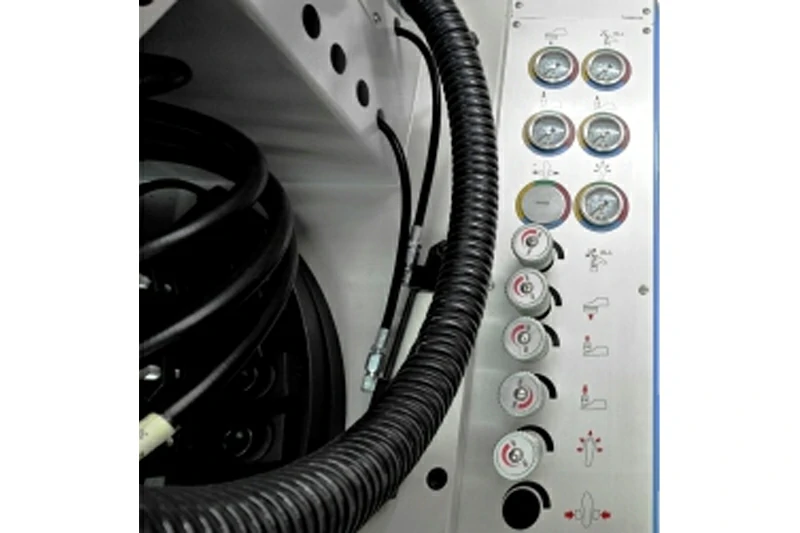
Lasting quality drives how the finished shoe looks and fits. Clamping and pincer tension, upper preparation, and last alignment all interact here, so this is where most process-control effort is spent. A per-style setup sheet recording clamp pressure, pincer sequence, and wiper settings keeps results repeatable across operators and shifts.
4. Sole Attaching and Pressing Machines
With the upper lasted, the outsole is joined by cementing and pressing, or by molding processes such as encapsulation. A sole attaching pressing machine applies controlled, uniform pressure — and heat where used — to bond the sole to the upper.
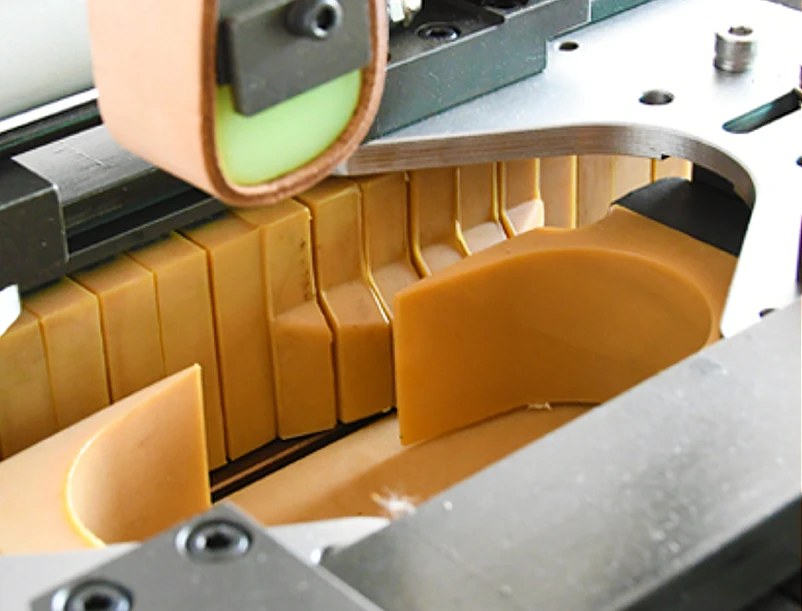
The key variables are pressure uniformity, repeatability between pairs, and changeover speed between sole designs. A press that drifts across a run produces shoes that look correct on the line but fail at the toe spring or heel after wear.
5. Moulding, Roughing, and Polishing
Between and after the main stages, several operations protect the result. A moulding machine shapes components such as counters and toe boxes so they hold form, while roughing and polishing equipment prepares bonding surfaces and refines the finished appearance. These steps decide whether the shoe holds its shape and looks finished at the point of sale.
Workshop and Auxiliary Equipment
Beyond the core machines, a running factory needs supporting items that are easy to overlook in a first equipment list:
- Clicking dies and die storage — pattern-specific steel dies for each panel and style.
- Lasts — foot-shaped forms in the sizes and shapes you produce; last wear affects lasting quality over time.
- Skiving and edge-folding tools — prepare seams before stitching.
- Roughing and surface-prep stations — condition bonding surfaces before sole attaching.
- Inspection and measuring tools — verify panel dimensions, seam density, and bond uniformity by stage.
These items are low cost individually but they decide whether the main machines can run at quality. Budget for them in the initial equipment plan rather than adding them after the line stalls.
Individual Machines vs. a Complete Production Line
New factories usually face one decision first: buy machines stage by stage, or choose a complete line. The table contrasts the two approaches.
| Individual machines | Complete production line | |
|---|---|---|
| Best for | Adding capacity, replacing one stage, low upfront volume | New factory, one shoe type, faster commissioning |
| Stage matching | You balance each station yourself | Stations selected to work together |
| Changeover | Flexible per machine | Configured for the target shoe type |
| Commissioning | More integration work | Faster to a running line |
For many buyers the fastest path is a complete TENGHONG production line selected for the shoe type they plan to make — for example a leather shoe production line — where cutting, stitching, lasting, and sole attaching are specified to run together.
Plan Your Equipment List by Shoe Type and Output
The exact mix depends on what you produce and how many pairs per hour you target. A line is only as fast as its slowest stage, so station count and machine cycle time should be balanced to your output goal rather than copied from another factory.
- Shoe type: safety, leather, sneaker, and women’s dress shoes place different demands on stitching and lasting, which changes machine selection.
- Output target: higher hourly volume needs more stations or faster cycle times at the bottleneck stage (usually stitching or lasting).
- Material: leather versus synthetic changes cutting force, skiving, and bonding requirements.
- Floor space and labor: automated and computerized stations reduce manual variation but need planning for staffing and maintenance.
Quality Control Checkpoints by Stage
Rather than inspecting only the finished shoe, effective lines check at each stage so a defect is traced to its source:
- After cutting: panel dimensions and edge quality against the pattern.
- After stitching: seam straightness, tension, and stitch density.
- After lasting: surface smoothness, no wrinkles, correct toe and heel shape.
- After sole attaching: bond uniformity, no gaps, even outsole alignment.
Recording defects by stage and style builds the data needed to tune machine settings over time and supports quality control claims you can stand behind with buyers.
Questions to Ask Your Machine Supplier
Before you request a quote, prepare the information a manufacturer or supplier needs to configure the right equipment. Clear technical requirements shorten the path from inquiry to a running line.
- Your shoe types and target materials (leather, synthetic, or mixed).
- Target output in pairs per hour or per day.
- Which stages you already have and which you need supplied.
- Required process — cementing, molding or encapsulation, or both.
- Any specification, tolerance, or surface-finish requirements that affect machine choice.
- Whether you need a single machine, a stage, or a complete OEM-configured line.
A good supplier will map these to a stage-by-stage equipment list and flag where your requirements need a specific machine configuration rather than a standard model.
Throughput, Labor, and Line Balancing
A process is only as fast as its slowest stage. If cutting outpaces stitching, work-in-progress piles up; if lasting is the bottleneck, finished uppers wait. Balancing station count and machine cycle time to the target hourly output keeps a line moving without overstaffing. Automated and computerized stations help most at the stages with the highest manual variation — typically stitching and lasting — while cutting and pressing benefit from fast changeover and consistent actuation.
Common Mistakes When Equipping a New Shoe Factory
- Buying one generic setting for every style instead of planning per-style setup.
- Skipping skiving before stitching, creating bulky seams that resist lasting.
- Ignoring last wear and shape drift over time.
- Poor sole-surface preparation, leading to weak bonds.
- End-only inspection, which hides the stage where a defect was introduced.
- Unbalanced stations, where one slow stage limits the whole line.
Frequently Asked Questions
What machines do I need to start a shoe factory?
At minimum you need cutting machines, sewing machines with skiving, lasting machines (toe, heel-seat, side), and sole attaching and pressing machines, plus moulding, roughing, and polishing equipment for finishing. Many new factories choose a complete line to cover all stages together.
How much does shoe factory equipment cost?
Cost depends on output, automation level, and whether you buy individual machines or a complete line. The most reliable way to estimate is to share your shoe types, materials, and target output with a supplier so the equipment list matches your actual needs rather than a generic configuration.
Should I buy individual machines or a complete production line?
Buy individual machines if you are adding one stage or starting small; choose a complete line if you are setting up a new factory for one shoe type and want faster commissioning with stations selected to work together.
What cutting machine is best for a shoe factory?
It depends on panel size, material, and volume. Swing-arm cutting machines suit smaller panels, traveling-head models handle longer materials and bigger dies, and plane (beam) machines cover wide, multi-layer cutting for higher output.
What is lasting and which machines do it?
Lasting pulls the stitched upper over a last and secures the toe, heel, and sides so the shoe holds its shape. It is done by toe lasting, heel-seat lasting, and side lasting machines, and it is the stage that most affects fit and surface quality.
How do I choose a shoe machine supplier?
Share your shoe types, materials, and output target, and ask for a stage-by-stage equipment list with the machine configuration behind each stage. A capable supplier explains why a specific configuration fits your requirement instead of quoting a standard model without context.
Conclusion
Starting a shoe factory means assembling the right machines for each stage — cutting, stitching, lasting, and sole attaching, supported by moulding, roughing, and polishing. Whether you build the line stage by stage or choose a complete TENGHONG production line, the goal is the same: equipment that is adjustable and consistent at every step so the factory can move from samples to stable production. If you are planning a new line, contact TENGHONG with your shoe types, materials, and output targets, and we will help match the right machines to your process.