An MES system in shoe manufacturing turns every workstation on the assembly line into a data point the planning team can act on. Instead of relying on end-of-shift paper counts, planners see cycle time, downtime, and piece counts the moment they happen, and they can reroute work orders when one station falls behind. For factories running modern shoe assembly machines, that visibility is the difference between chasing yesterday’s output and steering today’s order book. This article explains what MES does in a footwear plant, why integration with assembly machines is the step that unlocks real value, where the integration points actually sit on the line, and how to choose a production line foundation that makes MES a configuration exercise rather than a retrofit.
What Is MES in a Shoe Factory?
A Manufacturing Execution System, usually shortened to MES, sits between the company’s planning software (ERP) and the equipment on the floor (machine controllers and SCADA). In practical terms for a footwear plant, MES tracks every order from upper cut through sole press: which style is on which line, how many pairs each workstation has completed, where a batch is sitting when output stops, and which operator signed off on each critical step. The system can also capture labour hours, scrap events, and small stoppages that rarely make it onto a paper sheet.
What MES does not do is replace ERP planning, and it does not directly drive a machine. ERP decides what to make and when; MES decides what is happening right now; the machine controller decides how each cycle runs. Once those boundaries are clear, MES becomes a practical reporting and orchestration layer rather than another screen operators are forced to watch. Depending on the machine configuration, MES can be deployed gradually, starting with the few workstations that generate the most operational pain.
Why Integrate MES with Modern Shoe Assembly Machines?
Modern shoe assembly machines already collect the data MES needs. A lasting station can publish cycle time and piece count; a sole press can record bonding temperature and pressure; an upper preparation cell can log operator id and batch number. The reason to integrate is not to gather data for its own sake, but to act on three concrete outcomes that matter to a footwear factory.
First, end-to-end traceability: when a customer asks which lot a defective pair came from, MES can answer in minutes instead of days. Second, real-time OEE: downtime and small stops surface immediately, so maintenance can be called before a 10-minute issue becomes a two-hour one. Third, faster style changeovers: when the line switches from one article to another, MES can confirm that every station is on the new routing, which cuts the trial-and-error at the start of each run. None of these benefits require a full factory rebuild; they require the existing assembly machines to speak a common data language that MES can read.
Key Integration Points Across the Production Line
A typical shoe line begins with a cutting machine that prepares each upper component, then a moulding machine that shapes the lasting elements, followed by a sewing machine that joins upper parts, and a roughing and polishing station that prepares surfaces for lasting. Each of these stations should publish cycle time, status, and piece count to the MES layer so planners can see real progress against the daily order book.
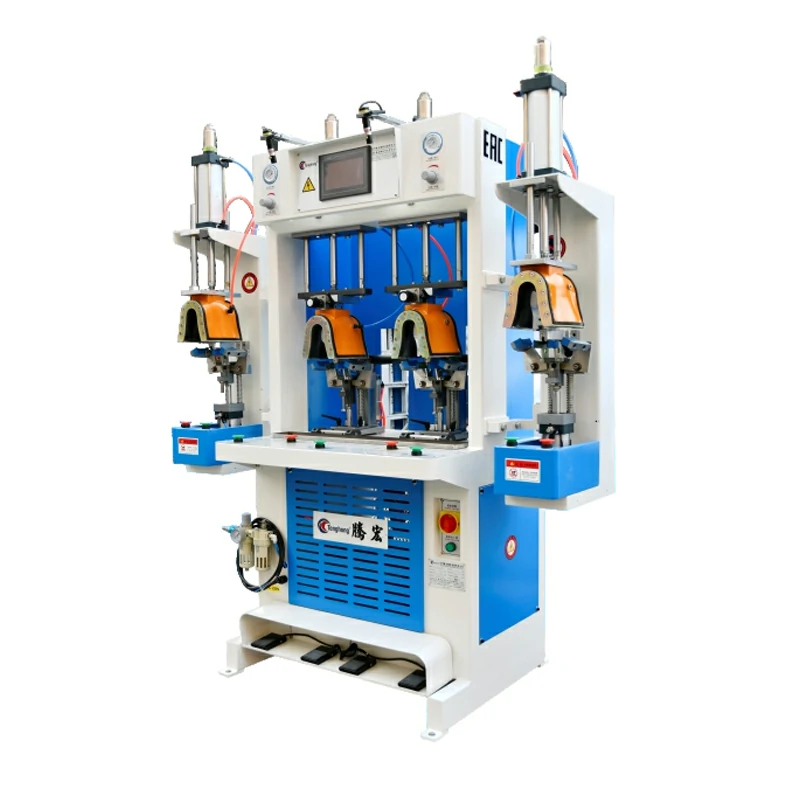
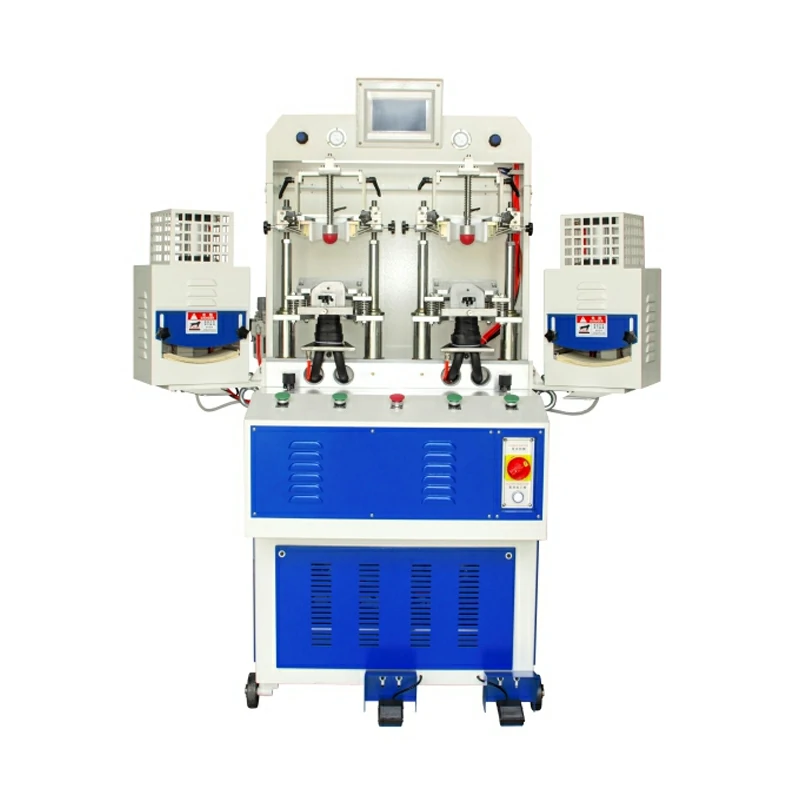
Downstream, the toe lasting machine pulls the upper over the last and reports its cycle data, while the side and heel seat lasting machine and the heel seat lasting machine complete the lasting sequence with the same data discipline. After lasting, the sole attaching pressing machine binds the upper to the outsole and records bonding parameters for every pair. Connecting all of these machines through a common MES schema lets the factory trace each pair from upper cut to sole press without manual data entry.
Choosing the Right Production Line Foundation
When MES integration is part of the plan, the underlying production line foundation matters as much as the software layer. For safety footwear, a safety shoes production line built around consistent cycle times and traceable workstations gives MES reliable data to work with. For athletic and casual output, a sneaker production line adds the high-mix changeover speed the MES layer depends on. For dress and casual leather output, a leather shoe production line connects traditional craftsmanship stations to the same data plane. Choosing the line foundation first keeps MES integration a configuration exercise rather than a retrofit project that touches every station one by one.
Conclusion
An MES system in shoe manufacturing is the layer that turns isolated workstation data into a factory-wide view of what is actually being made. The integration points matter at every station: cutting, moulding, sewing, and roughing and polishing upstream feed the data that lasting and sole attaching downstream rely on. Choosing the right production line foundation, whether for safety, sneaker, or leather output, determines whether MES can be configured cleanly or has to be retrofitted around mismatched equipment. The next step for any factory evaluating this path is to map current workstations, identify which shoe assembly machines already publish usable cycle data, and confirm the line foundation before the software selection begins.
FAQ
What is the difference between MES and ERP in a shoe factory?
ERP plans what to make and when; MES reports what is happening right now on each workstation. In a shoe factory, ERP holds the order book and material requirements, while MES tracks which style is running on which line, how many pairs each station has completed, and where output has stopped.
Which shoe assembly machines should be connected to MES first?
Start with the stations that drive cycle time and downtime visibility: cutting, moulding, sewing, and roughing and polishing upstream, followed by the lasting trio and the sole attaching pressing machine downstream. Connecting these first gives planners the data they need to act on the daily order book.
How does MES reduce changeover time?
When a line switches from one article to another, MES can confirm that every station is on the new routing and that the correct parameters are loaded. This removes the trial-and-error at the start of each run, which is especially valuable on a sneaker production line running frequent style changes.
Does MES integration require specific production line configurations?
Integration runs smoother when the underlying line foundation already supports consistent cycle times and traceable workstations. A safety shoes production line, a sneaker production line, or a leather shoe production line designed with data output in mind lets MES be configured rather than retrofitted, which shortens the deployment timeline.