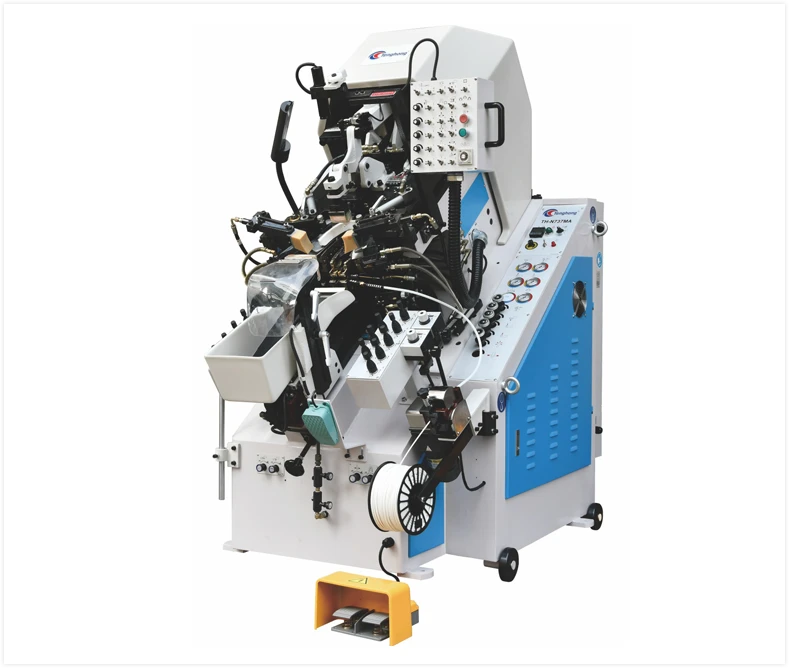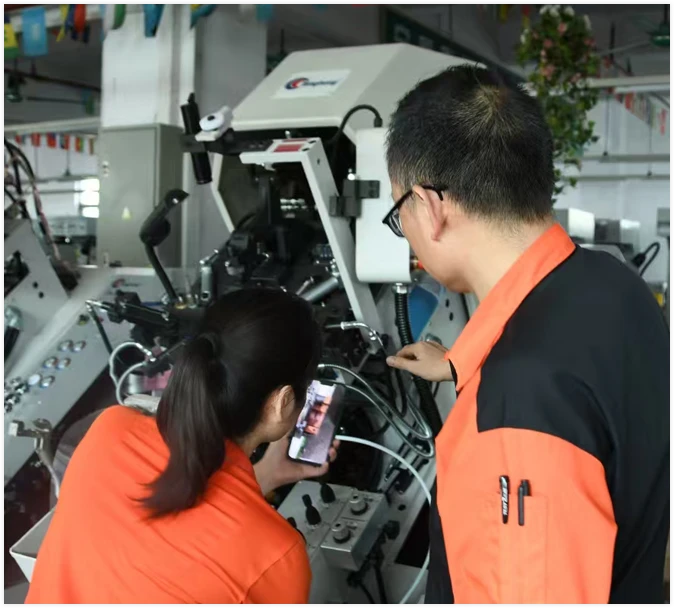
In high-volume footwear production, the toe lasting stage dictates overall assembly line output, shaping uniformity, and upper scrap rates. For manufacturing plants managing shifting style rotations or thousands of pairs per shift, selecting an automatic toe lasting machine requires balancing mechanical clamping precision, adhesive application control, and model changeover speed.
This guide evaluates five core machinery configurations used in industrial shoe manufacturing. It examines how pincer mechanics, computerized memory systems, and hot-melt cementing methods influence cycle stability, downtime, and operational ROI.
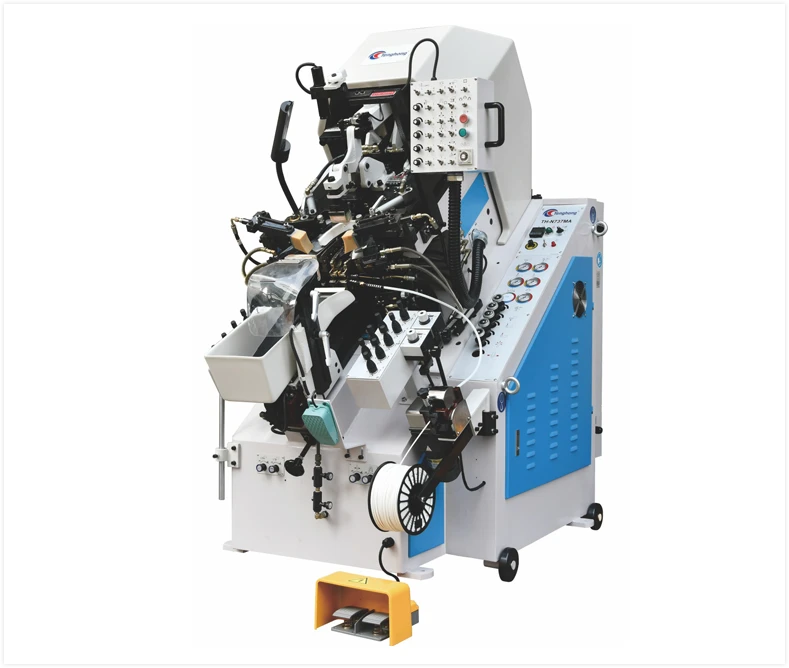
The Operational Shift: Why Large-Scale Shoe Factories Are Upgrading Toe Lasting Automation
Toe lasting is one of the most mechanically demanding steps in footwear assembly. The upper material—whether stiff natural leather, technical knit, or layered synthetic composite—must be stretched over the last, pulled under tension, coated with adhesive, and wiped flat against the insole without pleating or upper tearing.
In high-throughput facilities, manual or legacy hydraulic machines face three consistent operational bottlenecks:
- Tension Asymmetry & Upper Scrap: Inconsistent manual pull forces across different pincers cause uneven stretching, resulting in skewed toe centerlines and high defect rates.
- Adhesive Spill and Waste: Traditional manual cementing or rudimentary glue plates frequently result in excess glue overflow onto delicate uppers or inadequate bonding along the feather line.
- Protracted Changeover Downtime: When switching across distinct last contours (such as moving from a wide athletic last to a tapered formal shoe), manual pincer repositioning and wiper height adjustments can halt a production line for extended intervals.
Modern industrial toe lasting machine solutions mitigate these constraints by integrating multi-axis independent pincer control, computerized recipe memory, and automated adhesive dispensing directly into the wiping stroke.
Evaluation Criteria: 5 Engineering Benchmarks for High-Volume Lasting Equipment
Before comparing specific machine configurations, engineering and procurement teams should evaluate prospective equipment against five technical parameters:
- Pincer System Articulation: Industrial-scale lines typically require a 9-pincer configuration where individual pincers can pull, swivel, and flash-open independently. This ensures tension balances around asymmetric toe contours.
- Cementing Mechanism (Tray vs. Servo Dispensing): Traditional heated glue plates coat a broad area quickly, but servo-controlled dispensing nozzles deposit hot-melt adhesive precisely along the lasting margin, preventing adhesive spillage and reducing nozzle clogging.
- Computerized Recipe Memory: Systems equipped with PLC touchscreen storage allow operators to recall calibrated pincer positions, wiper pressure profiles, and support table stroke heights instantly when rotating stock keeping units (SKUs).
- Wiper & Last Support Synchronization: Two-stage support table elevation combined with auxiliary wiping sweeps ensures the upper margins are pressed flat against the insole before the adhesive cools.
- Hydraulic and Pneumatic Stability: Robust proportional valves, oil cooling circuits, and reinforced clamping frames are essential to sustain stable pressure without thermal hydraulic drift during uninterrupted multi-shift operations.
The Top 5 Automatic Toe Lasting Machines Engineered for Mass Production
The following five machine classifications represent standard technical configurations deployed across high-output footwear manufacturing facilities.
1. The High-Throughput Heavyweight: 9-Pincer Computer Memory Automatic Cementing Lasting Machine
Engineered as a core production workhorse for large-scale leather shoe and dress shoe assembly lines, this configuration pairs a comprehensive 9-pincer clamping array with automated cementing and digital recipe storage.
- Pincer Architecture: Nine independent pincers arranged with dual-stage auto-tracking. The front pincers provide initial centering tension while the lateral groups equalize tension across the ball area.
- Adhesive Delivery: Integrated automatic cementing mechanism with adjustable glue points that match the feather line curvature.
- Control Interface: Touchscreen numerical control capable of storing dozens of last profiles, allowing operators to recall wiper sweep angles and pincer pull strokes.
- Best Suited For: Large factories running structured leather footwear, formal shoes, and heavy-duty casual footwear requiring firm, wrinkle-free toe shaping.
2. The High-Flexibility Workhorse: Computerized Memory Automatic Cementing Toe Lasting Machine
Designed for OEM/ODM facilities running multiple shoe styles across rotating shifts, this platform emphasizes rapid, tool-less mechanical adjustments and programmable pincer behavior.
- Key Mechanism: Quick-change wiper assemblies and swift last-support indexing reduce mechanical recalibration times between batches.
- Pincer Dynamics: Features programmable pincer flash-open functions. As the wipers advance, select side pincers release their grip sequentially, preventing excessive tension from tearing light synthetics or delicate mesh uppers.
- Best Suited For: Sport-casual footwear, women’s fashion footwear with diverse toe shapes, and contract manufacturers requiring frequent SKU changeovers.
3. Precision Adhesive Dispensing Specialist: Visual Servo Locus 5-Axis Toe Lasting Machine
For operations utilizing technical microfibers, knit uppers, or premium footwear where cement contamination results in immediate scrap, five-axis servo dispensing machines replace traditional glue plates.
- Dispensing Accuracy: Direct-drive servo glue nozzles trace the exact perimeter of the insole margin. This nozzle design prevents adhesive pooling and eliminates glue tray cleaning cycles.
- Last Support Mechanics: Micro-adjustable heel and toe rests ensure precise spatial alignment relative to the wiper path.
- Best Suited For: High-end athletic running shoes, seamless upper constructions, and sharp, asymmetrical fashion lasts where tight adhesive control is non-negotiable.
4. Rugged Continuity & High Power: 9-Pincer Hydraulic Automatic Toe Lasting Machine
Facilities manufacturing heavy work boots, safety footwear with internal steel toe caps, or thick-gauge natural hides demand high hydraulic clamping force over intricate digital settings.
- Structural Design: Heavy-duty cast frame equipped with high-pressure hydraulic circuits and dual-pump fluid drive for continuous pressing cycles.
- Mechanical Characteristics: Deep-reach gripping jaws built from heat-treated alloy steel withstand high tensile pulls without slippage.
- Best Suited For: Industrial work boots, military footwear, and heavy outdoor boots constructed with high-grammage leather.
5. Balanced High-Speed Standard: 7/9-Pincer Computer Memory Control Toe Lasting Machine
For facilities where uppers are pre-cemented or utilize heat-activated adhesive films, a streamlined lasting unit focuses purely on mechanical pulling, alignment, and wiping.
- Functional Focus: Removes the internal hot-melt melting and pumping circuit, simplifying maintenance protocols and reducing unit footprint on dense factory floors.
- Operational Cycle: Fast mechanical cycle cadence engineered to balance line speed in automated conveyor systems.
- Best Suited For: Vulcanized shoe assembly lines, canvas shoes, and manufacturing setups operating dedicated upstream cementing stations.
Machine Comparison Matrix for Industrial Selection
| Evaluation Factor | 9-Pincer Computer Memory Auto-Cementing | Flexible Computerized Auto-Cementing | 5-Axis Servo Locus Lasting Machine | Heavy-Duty Hydraulic 9-Pincer | Standard Memory Lasting Machine |
| Pincer Count | 9 pincers | 9 pincers | 9 pincers (servo assisted) | 9 heavy-duty pincers | 7 to 9 pincers |
| Cementing System | Auto hot-melt glue plate | Auto hot-melt glue plate | 5-axis servo tracking nozzle | External / Plate option | Pre-cemented / Dry cycle |
| Primary Upper Compatibility | Medium to heavy leather | Casual, synthetic, mixed | Technical mesh, knit, microfiber | Heavy leather, safety boots | Canvas, standard board-lasted |
| Changeover Method | Digital memory + manual pins | Fast-lock tooling + digital memory | Full recipe digital recall | Manual mechanical stop adjustment | Digital memory profile |
| Maintenance Demand | Moderate (glue system cleaning) | Moderate | Low (no glue tray residue) | Low (routine hydraulic fluid checks) | Low (no adhesive circuit) |
Note: Output speeds, hydraulic power consumption, and mechanical configurations vary based on plant electrical ratings and specific last dimensions. Review detailed engineering schematics with equipment suppliers to verify line compatibility.
Total Cost of Ownership: Payback Period, Adhesive Savings, and Labor Reduction
Purchasing automated lasting machinery requires evaluating the total cost of ownership (TCO) beyond initial capital expenditure. In high-volume operations, three areas drive return on investment:
- Adhesive Material Optimization: Traditional manual glue application routinely over-applies hot-melt cement to ensure edge bonding. Automated cementing systems deposit a controlled film width, which can reduce adhesive consumption across thousands of pairs per shift.
- Defect and Rework Reduction: Computerized pincer sequencing eliminates tension spikes that rupture shoe uppers or produce loose toe pockets. Lower scrap rates directly protect profit margins on premium raw leather.
- Labor Allocation: An operator on an automated lasting machine focuses primarily on last loading and visual inspection. Eliminating separate manual brushing or multiple pre-forming steps allows plants to streamline staffing along the lasting line.
Depending on regional labor costs, local energy rates, and shift volumes, production lines typically amortize the upgrade to an advanced 9 pincers automatic cementing toe lasting machine through reduced scrap and consistent throughput.
Line Integration Guide: Commissioning, Hydraulic Maintenance, and Pincer Calibration
Achieving optimal performance from an automated toe lasting machine requires disciplined preventive maintenance and calibration practices:
Pincer Calibration and Adjustment
- Centering Alignment: The number-one pincer must align with the central axis of the shoe last. Misalignment shifts the upper off-center, causing crooked toe caps.
- Tension Balancing: Adjust clamping cylinder pressure according to upper material elasticity. Highly elastic materials require lower initial pull pressures paired with delayed wiper action to prevent over-thinning.
Hydraulic and Pneumatic Management
- Operating Temperature: Hydraulic oil temperature should remain within recommended operating limits. Continuous multi-shift cycles in warm climates benefit from dedicated oil chillers to prevent viscosity loss and pressure drop.
- Fluid Filtration: Inspect hydraulic oil filters periodically and replace fluid according to operating hours to protect proportional valves from debris contamination.
Wiper and Glue Nozzle Maintenance
- Glue Circuit Purging: For machines equipped with hot-melt cementing, purge nozzles and clean heating chambers regularly to eliminate charred glue buildup that obstructs adhesive distribution.
- Wiper Edge Inspection: Check wiper plates for burrs or adhesive residue that can drag across insole surfaces during the sweeping stroke.
Key Takeaways
- Automation Type Dictates Line Agility: High-mix factories benefit most from computerized recipe memory and fast-change tooling, while single-model high-volume facilities prioritize heavy-duty hydraulic durability.
- Cementing Precision Protects Yield: Integrating automatic cementing into the lasting cycle cuts adhesive consumption, shortens cycle times, and prevents surface contamination on delicate uppers.
- Pincer Mechanics Matter: A 9-pincer setup with independent tensioning and flash-open capabilities provides the mechanical flexibility required to process complex toe contours without tearing upper materials.
- TCO Extends Beyond Machine Cost: Reduced scrap rates, controlled hot-melt adhesive usage, and lower labor overhead are the primary drivers of capital recovery on automated lasting lines.
Frequently Asked Questions: Sourcing Toe Lasting Machines for Large Factories
How many pairs per 8-hour shift can an automatic toe lasting machine achieve?
Actual output depends on shoe construction, upper material stiffness, and operator loading speed. In standard mass-production environments, a fully automatic unit typically completes a cycle every few seconds, supporting outputs between 1,200 and 2,000 pairs per 8-hour shift under steady operating conditions.
Can a single toe lasting machine process both athletic knit shoes and heavy leather work boots?
While computerized memory machines allow operators to adjust pincer pull strokes and hydraulic clamping pressures for diverse materials, heavy work boots with internal steel safety caps often require dedicated high-tonnage hydraulic presses. Conversely, delicate knit and microfiber uppers require soft-grip pincer jaws and precise servo-controlled tensioning to prevent material damage.
What utility supplies are required to run an industrial toe lasting machine?
Industrial units generally require a three-phase electrical connection (e.g., 380V or 220V depending on factory infrastructure), a clean and dry pneumatic air supply (typically 5 to 6 bar), and dedicated hydraulic oil circuits. Machines featuring heated glue systems require continuous power to maintain uniform adhesive viscosity.
What is the advantage of a 5-axis servo adhesive system over a traditional glue plate?
A 5-axis servo system uses a precision nozzle to trace the exact geometric boundary of the insole, applying adhesive only where needed. Traditional glue plates press adhesive across a broader surface, which can cause glue to bleed over the edge or require frequent manual cleaning to remove baked-on residue.