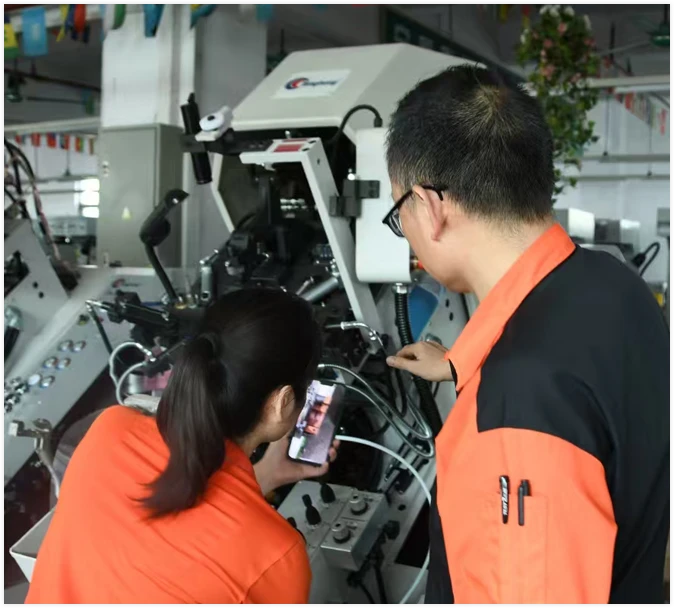
Importing lasting machinery from China offers footwear manufacturers a proven way to scale assembly lines while controlling capital investment. However, securing the right equipment requires balancing mechanical design, electronic synchronization, and rigorous factory acceptance standards. The success of an assembly line depends heavily on selecting the correct toe lasting machine, configuring its gripping and cementing systems to match specific shoe lasts, and confirming factory electrical compatibility prior to export.
This guide outlines the critical technical criteria, factory auditing protocols, and logistics considerations required to successfully procure industrial lasting machinery from Chinese manufacturers without costly line stoppages.
1. The Critical Role of Lasting Equipment in Modern Footwear ROI
The lasting room serves as the structural core of footwear assembly. Among all assembly stages, the toe lasting operation exerts the greatest mechanical stress on upper materials, directly determining the featherline definition, vamp symmetry, and bond durability of the finished shoe. If tension distribution is uneven or cement application drifts, downstream processes cannot correct the defect, resulting in high scrap rates.
Global footwear brands and contract manufacturers frequently source shoe assembly machinery from China because regional equipment builders have refined high-speed, repeatable mechanical systems. Yet, cross-border procurement introduces specific operational risks:
- Mismatched Last Geometry: Machinery calibrated for standard athletic lasts can tear delicate dress leather or wrinkle pointed women’s footwear.
- Component Sourcing Disparities: Subtle variations in hydraulic valves, heating elements, and programmable logic controllers (PLCs) dictate long-term maintenance costs and mean time between failures (MTBF).
- Remote Commissioning Friction: Inadequate pre-shipment testing often leads to prolonged downtime during factory installation abroad.
Selecting a reliable toe lasting machine requires looking beyond exterior steel casings to evaluate internal hydraulic circuits, servo kinematics, and supplier manufacturing depth.
2. Core Machine Architecture: Critical Components That Define Lasting Precision
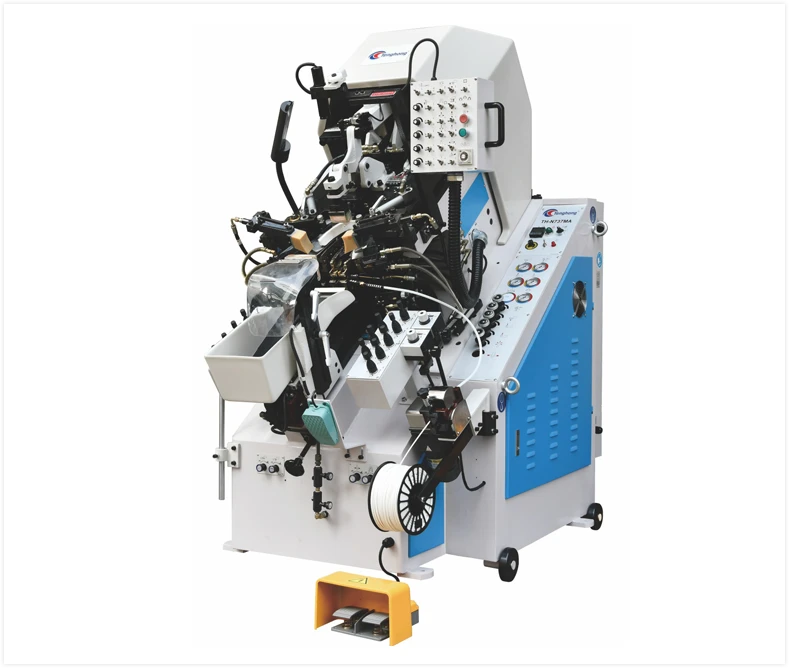
A durable lasting machine balances mechanical rigidity with delicate material handling. When auditing equipment schematics and component bills of materials (BOM), focus on four mechanical subsystems.
Pincer Assembly and Tension Dynamics
The pincer group pulls the upper material over the shoe last before wiping and cementing.
- Pincer Configuration: Industrial machines typically feature 7 to 9 independently adjustable pincers. For complex curvatures and asymmetrical toe profiles, a 9-pincer setup allows granular tension regulation across the vamp and ball areas.
- Independent Ergonomic Control: Look for systems that allow individual pincer stroke adjustment, quick-release pincer jaws, and independent angle adjustments. This isolates tension zones and prevents upper rupture on fragile synthetics or vegetable-tanned leathers.
Wiper Mechanism and Ironing Systems
Once the upper is stretched, heated wiper plates advance to press and fold the material margin flat against the insole.
- Material Integrity: Wiper plates must be machined from high-tensile, heat-treated tool steel to prevent thermal warping.
- Thermal Management: Integrated, digitally regulated heating elements within the wipers ensure uniform thermoplastic activation without scorching delicate materials. Two-stage wiping motions (forward stroke followed by upward pressure ironing) produce a sharp, flat bottom perimeter.
Cementing and Tracing Systems
Adhesive application must match the contour of the last without contaminating the upper.
- Mechanical Nozzles vs. Servo Tracing: Entry-level configurations use fixed-profile cement nozzles. Advanced automated toe lasting machines use multi-axis servo-driven tracing nozzles that follow programmed shoe contours, ensuring precise glue cutoff and zero margin spillover.
- Thermal Control: Independent temperature zoning for the glue melting pot and delivery hoses prevents adhesive degradation and nozzle blockages.
Hydraulic and Electrical Infrastructure
- Hydraulics: Ensure the hydraulic power unit integrates manifold-mounted directional valves, dual-stage pressure pumps, and oil cooling systems to prevent viscosity drop during full-shift continuous operation.
- Control Architecture: Modern operations require standard industrial PLCs paired with multilingual touchscreens that store multi-profile last parameters to minimize changeover delays.
Industrial Toe Lasting Machine: Critical Component Checklist
| Subsystem | Standard Configuration | High-Duty / Precision Configuration | Verification Parameter |
| Pincer Group | 7-Pincer mechanical link | 9-Pincer independent servo / hydraulic regulation | Check individual pincer jaw stroke, angle adjustability, and grip serration profile. |
| Wiper Mechanism | Single-stage mechanical wiper plates | Two-stage motion with independent auxiliary side wipers | Verify tool-steel hardness, thermal uniformity across plates, and stroke limit switches. |
| Cementing Delivery | Standard mechanical extrusion plate | Fully synchronized servo tracer with dynamic cut-off | Inspect path programming repeatability, nozzle heating zones, and anti-drip mechanisms. |
| Hydraulic Power Unit | Single-pump manifold with basic tank | Dual-pressure circuit with integrated heat exchanger | Confirm operating pressure range, hydraulic valve origin, and oil filtration rating. |
| Electronic Control | Relay-logic or proprietary board | Modular PLC with touch HMI and recipe storage | Review program storage capacity, error logging, and emergency stop compliance. |
3. Technology Match: Evaluating Machine Types for Your Footwear Portfolio
Not every factory floor requires a fully computerized machine. Equipment selection must align with production volume, product variety, and operator skill levels.
Production Style vs. Machine Selection Framework
| Production Volume & Mix | Recommended Machine Type | Typical Footwear Categories | Key Functional Advantages | Operational Considerations |
| High Variety / High SKU (Frequent style changes, complex shapes) | Computerized Servo-Controlled Toe Lasting Machine | Athletic sneakers, pointed dress shoes, mixed-material footwear, multi-width lasts | • Rapid digital recipe changeover • Motorized, programmable pincer positioning • Dynamic multi-axis servo cement tracing | Higher initial equipment investment; requires technicians capable of digital PLC and servo drive parameter management. |
| Dedicated Volume Runs (Uniform shoe designs, low daily variation) | Hydraulic Automatic Toe Lasting Machine | Heavy-duty work boots, vulcanized casual shoes, uniform safety footwear | • Robust mechanical stops and high clamping force • Lower capital expenditure • Direct, straightforward hydraulic maintenance | Manual adjustment required during last-style changeovers, leading to longer line changeover times. |
Hydraulic Automatic Toe Lasting Machines
- Best Suited For: High-volume, low-mix production lines producing work boots, vulcanized casual shoes, or uniform footwear profiles.
- Strengths: High clamping force, proven mechanical durability, straightforward troubleshooting for mechanical technicians, and lower acquisition cost.
- Limitations: Tooling and manual repositioning of pincers during shoe-size or last-style changeovers require longer setup times.
Computerized Servo-Controlled Toe Lasting Machines
- Best Suited For: High-mix manufacturing, contract factories handling frequent brand runs, high-grade athletic sneakers, and asymmetrical fashion footwear.
- Strengths: Digital storage of lasting profiles, motorized auto-positioning pincers, and precise glue delivery paths reduce operator dependency and changeover times.
- Limitations: Higher initial capital cost; requires technicians familiar with electronic drive parameters and PLC maintenance.
4. Supplier Due Diligence: Vetting Chinese Shoe Machinery Manufacturers
The Chinese shoe machinery market contains both integrated engineering plants and small assembly workshops. Distinguishing between them ensures consistent build quality and ongoing technical support.
- Verify In-House Machining Capabilities: Reliable manufacturers perform heavy frame welding, stress-relieving heat treatment, and precision CNC milling of machine beds and pincer housings in-house. Inquire about their CNC machining centers or request production-line footage showing raw castings being finished.
- Review Component Provenance: Confirm the brands utilized for PLCs, contactors, hydraulic directional valves, and pressure transducers. Premium builders standardize on internationally serviceable brands (such as Schneider, Omron, Yuken, or Rexroth equivalents) rather than unbranded local alternatives.
- Assess Customization and Voltage Adaptability: Industrial power configurations vary widely across export destinations (e.g., 380V 50Hz 3-phase, 220V 60Hz 3-phase, or 415V 50Hz). Established builders can build machines to your factory’s precise power grid without relying on step-down transformers.
- Identify True Manufacturing Specialization: Partner with experienced toe lasting machine manufacturers that demonstrate domain focus in lasting and bottoming machinery rather than general export brokers listing thousands of unrelated industrial tools.
5. Factory Acceptance Testing (FAT) & Quality Verification Protocol
Never authorize final balance disbursement or equipment packing without completing a rigorous Factory Acceptance Test (FAT). If factory visits are impractical, commission a detailed live video inspection structured around this sequence:
Step 1: Structural & Utility Pre-Check
 └─ Confirm wiring labeling, paint finish, grounding integrity, and emergency stops.
Step 2: Dry-Cycle Endurance Test
 └─ Run continuous dry cycles (minimum 30–60 min) to verify hydraulic pressure stability.
Step 3: Live Material Trial (Wet Run)
 └─ Test actual production uppers, insoles, and lasts to verify pincer tension and wiper lines.
Step 4: Thermal, Fluid, & Spare Parts Sign-Off
 └─ Measure adhesive temperature distribution, inspect for fluid leaks, and pack spare parts.
- Structural and Safety Pre-Check: Verify cable trunking, wire ferrule labeling against the electrical schematic, safety light curtains, dual-hand activation buttons, and emergency stop interlocks.
- Dry-Cycle Endurance Test: Require the machine to run continuously for at least 30 to 60 minutes without material. Use this trial to verify that hydraulic oil temperature remains within operating thresholds and that pressure gauges maintain steady readings without pump cavitation.
- Live Material Processing Trial (Wet Run): Ship your exact lasts, uppers, and insoles to the factory prior to testing. Observe the machine lasting the actual product. Check for:
- Symmetrical upper pull without grain overstretching.
- Flat, well-ironed featherline margins.
- Precise adhesive placement with no stringing or surface contamination.
- Thermal and Seal Inspection: Use an infrared thermometer to verify that wiper plate temperatures match the digital controller readout across the entire contact surface. Inspect all hydraulic valve blocks, cylinder rod seals, and hose crimps for micro-leaks immediately following high-pressure clamping tests.
- Spare Parts Inventory Verification: Confirm that the export crate includes essential maintenance spares: replacement pincer teeth, heating cartridges, hydraulic seal rebuild kits, pneumatic solenoids, and specialized adjustment wrenches.
6. Logistics, Electrical Compliance, and Safe International Transit
Industrial machinery faces significant moisture and mechanical vibration during maritime shipping. Protect your investment through structured export protocols.
Packaging Specifications for Ocean Transit
- Vapor Corrosion Inhibitor (VCI) Packaging: The bare metal of wiper plates, pincer shafts, and machine tables must be coated with industrial anti-corrosion grease, wrapped in VCI film, and vacuum-sealed with desiccant packs.
- Solid Structural Crating: Ensure the equipment is bolted directly to the base skid of a fully enclosed, ISPM-15-certified fumigated plywood crate. Internal diagonal bracing must anchor the machine head to prevent tipping from crane motion or rough seas.
Factory Utility and Facility Readiness
Before the container arrives at your facility, verify your site’s physical readiness:
[ ] Electrical Grid: Voltage, phase sequence, and current capacity confirmed.
[ ] Pneumatic Supply: Dry, filtered compressed air meeting machine pressure ratings.
[ ] Floor Loading: Reinforced, level concrete pad capable of supporting concentrated weight.
[ ] Rigging Clearance: Doorway heights, crane access, and heavy-duty forklift paths verified.
[ ] Environmental Control: Adequate exhaust ventilation for hot-melt adhesive vapors.
7. Post-Installation Support: Mitigating Cross-Border Downtime Risks
Long-term return on investment depends on your team’s ability to maintain the machine locally after commissioning.
Structured Remote Commissioning
Ensure the supplier provides complete digital documentation, including:
- High-resolution hydraulic flow schematics and electrical circuit diagrams with standardized wire numbering.
- Step-by-step video guides demonstrating calibration for pincer stroke limits, wiper height, and touchscreen recipe creation.
- Direct access to an assigned service technician via remote messaging channels to assist with initial power-up and troubleshooting.
Preventive Maintenance Schedule
To prevent unexpected downtime, establish strict operational routines:
- Daily: Purge moisture traps on the pneumatic regulator; inspect the glue nozzle for char buildup; clear adhesive residue from wiper plates.
- Weekly: Grease guide rails, pincer pivots, and slide ways; inspect hydraulic hoses for abrasion or pressure swelling.
- Monthly: Check hydraulic oil clarity and filter differential pressure; verify tightening torque on pincer mechanical fasteners; inspect electrical cabinet air filters.
- Annually: Complete a full hydraulic fluid flush and filter replacement; recalibrate temperature controller thermocouples.
Key Takeaways
- Prioritize Mechanics Over Aesthetics: High-grade lasting machinery is defined by heat-treated tool steel wipers, independently adjustable 7-to-9 pincer layouts, and stable hydraulic manifold blocks.
- Match Control to Production Style: Opt for hydraulic configurations when running dedicated mass lines with minimal variation; select computerized servo-driven models when handling multiple shoe lasts, varied materials, and rapid turnaround demands.
- Demand Rigorous Pre-Shipment FAT: Never accept machinery based solely on static photographs. Mandate continuous dry-run thermal checks and live trials using your production lasts and upper materials.
- Secure Transit and Spares Upfront: Enforce vacuum-sealed VCI export crating and negotiate a comprehensive wear-parts kit (pincer jaws, heating rods, seal sets) directly into the purchase contract.
Frequently Asked Questions (FAQ)
How many pincers should I choose for an industrial toe lasting machine?
For standard round-toe footwear, work boots, or simple sneaker designs, a 7-pincer configuration generally provides sufficient tension distribution. However, if your production includes asymmetrical running shoes, pointed women’s shoes, or stiff leathers, a 9-pincer setup is recommended. The additional pincers allow independent adjustment around the ball and waist areas of the shoe, preventing material wrinkles along the featherline.
Can a single toe lasting machine process both heavy leather boots and lightweight mesh sneakers?
Yes, provided the machine allows independent adjustment of pincer pulling stroke, clamping pressure, and wiper heating. Heavy leather requires higher pulling forces and elevated wiper temperatures to set the leather fibers. In contrast, lightweight knit or mesh uppers require delicate, multi-stage tension profiles to avoid tearing. Computerized machines with programmable parameter storage make transitions between such diverse materials faster and more repeatable.
What electrical specifications must be verified when importing from China?
China’s domestic industrial power grid runs at 380V, 50Hz, 3-phase. If your factory operates on a different grid standard (such as 220V 60Hz 3-phase or 415V 50Hz 3-phase), you must stipulate this early in the procurement agreement. Reputable manufacturers will install native-voltage motors, heating elements, and power supplies during assembly, avoiding the efficiency losses and footprint of external step-down transformers.
What spare parts should always be included with the initial shipment?
Always order at least one to two years’ worth of routine consumable items alongside the machine crate. This includes complete sets of pincer teeth/jaw pads, electric heating elements for the wiper plates and glue melt tank, cylinder hydraulic seal sets, pneumatic solenoid valves, proximity sensors, and replacement Teflon wiper protectors. Sourcing these items in the original crate avoids air-freight costs and customs delays during unexpected line maintenance.