The digital transformation of shoe factories is the shift from workstations that depend on individual operator skill to connected production stages where each machine publishes data and follows a coordinated routing. For factory owners running manual lines, the question is not whether to automate but where to start, which stages deliver the fastest payback, and how to avoid disrupting current orders during the transition. This article walks through what changes at each production stage when a shoe factory moves from manual to automated, where the integration points sit, and how to choose a production line foundation that makes the transition a staged upgrade rather than a full-line shutdown.
What Does Digital Transformation Mean for a Shoe Factory?
Digital transformation in a shoe factory means replacing isolated manual workstations with machines and sensors that share a common data layer. On a manual line, an operator at each station works from a paper routing sheet, counts pieces by hand, and reports problems verbally. On a digitally connected line, each machine records cycle time, piece count, and status, and the planning team sees the entire line’s progress in real time. The transformation does not require replacing every workstation at once. Most factories begin with one or two stages where manual bottlenecks are most costly, add data collection there, and extend the connected stages as confidence and budget allow.
From Manual Workstations to Connected Production Stages
The journey from manual to automated runs along the same sequence every shoe follows: upper preparation, lasting, and sole bonding. At the upper preparation stage, a manual line relies on operators who cut, shape, sew, and prepare surfaces by hand or on standalone machines with no data output. An automated line begins with a cutting machine that prepares each upper component to specification, followed by a moulding machine that shapes the lasting elements, a sewing machine that joins upper parts with consistent stitch control, and a roughing and polishing station that prepares surfaces for lasting. Each of these stations can publish cycle time and piece count so planners see real progress against the daily order book.
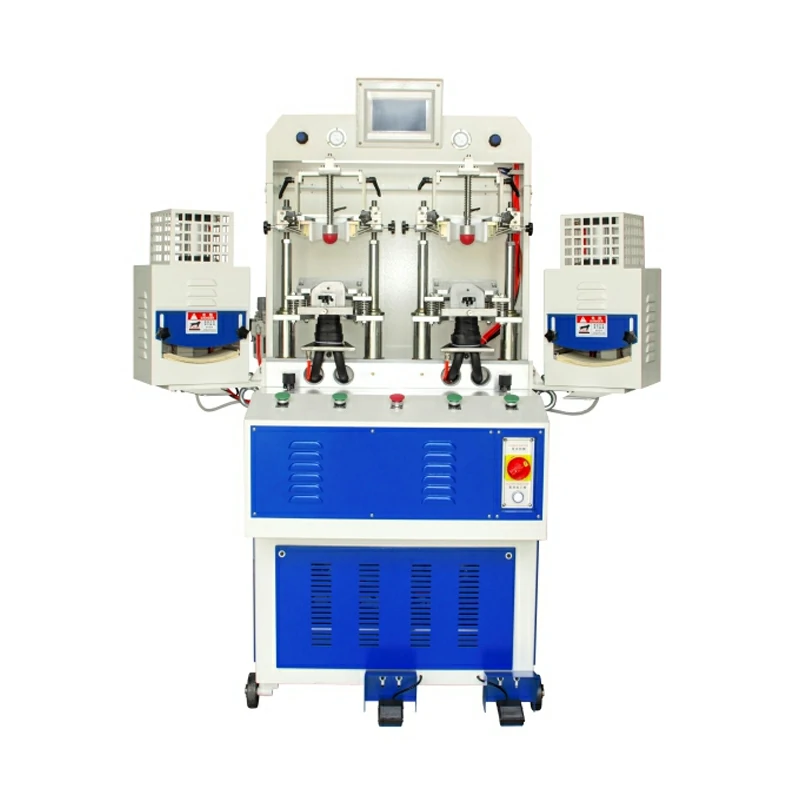
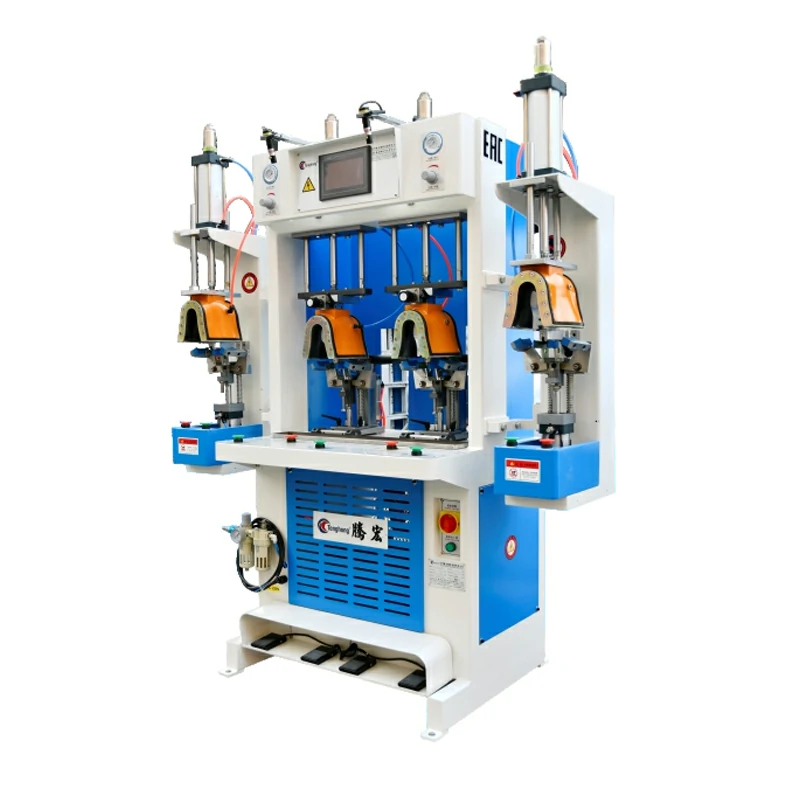
At the lasting stage, manual operations depend heavily on skilled operators who pull the upper over the last by hand or on semi-automatic machines. Automation replaces that dependency with a toe lasting machine that pulls and bonds the toe, a side and heel seat lasting machine that forms the side and heel, and a heel seat lasting machine that finishes the rear seat. These stations work in sequence and can share routing data, so a change in article triggers every lasting station to load new parameters without manual reconfiguration.
After lasting, the sole bonding stage moves from manual cementing and hand pressing to a sole attaching pressing machine that applies controlled pressure and temperature for each pair. Automating this stage removes the variability that hand pressing introduces, which is one of the most common sources of delamination returns.
Choosing the Right Automation Starting Point
Deciding where to begin the digital transformation depends on which manual stage generates the most scrap, downtime, or operator dependency. For factories already running some automated machines, the first step is often connecting those machines to a shared data layer rather than buying new equipment. For factories starting fresh, choosing a production line foundation designed for the target shoe type shortens the path to a connected factory. For safety footwear, a safety shoes production line built around consistent cycle times and traceable workstations gives the data layer a reliable foundation. For athletic and casual output, a sneaker production line adds the changeover speed that frequent style changes demand. For dress and casual leather output, a leather shoe production line connects traditional craftsmanship stations to the same data plane. For hand-welted premium footwear, a goodyear shoes production line brings structure and process consistency to a category that has historically depended on individual craftsman skill. For fashion footwear with narrow lasts and tall heels, a high-heel women shoes production line manages the specialized lasting and bonding geometry that these styles require. Selecting the line foundation first keeps the transformation a staged configuration exercise rather than a multi-vendor integration project.
Conclusion
The digital transformation of shoe factories moves each production stage from isolated manual work to connected, data-sharing machines. At the upper preparation stage, automated cutting, moulding, sewing, and roughing and polishing replace manual variability with consistent output and cycle data. At the lasting stage, automated toe, side and heel seat, and heel seat lasting machines remove the dependency on individual operator skill and allow routing changes without manual reconfiguration. At the sole bonding stage, a sole attaching pressing machine replaces hand pressing with controlled pressure and temperature, reducing delamination risk. Choosing the right production line foundation, whether for safety, sneaker, leather, goodyear, or high-heel output, determines whether the transformation proceeds as a staged upgrade or a multi-vendor integration burden. The practical next step is to map the current line, identify which stage produces the most scrap or downtime, and confirm the production line foundation before purchasing new equipment.
FAQ
What is the first step in transforming a manual shoe factory?
Start by mapping the current production line and identifying which manual stage generates the most scrap, downtime, or operator dependency. For factories with some automated machines already in place, the first step may be connecting those machines to a shared data layer rather than buying new equipment.
Which production stages should be automated first?
The answer depends on where the manual bottlenecks are. Upper preparation stages, including cutting, moulding, sewing, and roughing and polishing, often deliver the fastest payback because they handle the highest volume of components. Lasting and sole bonding stages are typically automated next, as they directly affect fit and bonding quality.
Does digital transformation require replacing every machine at once?
No. Most factories stage the transformation by automating one or two stages where manual bottlenecks are most costly, adding data collection there, and extending the connected stages as confidence and budget allow.
How does choosing a production line foundation affect the transformation?
Selecting a production line foundation designed for the target shoe type, such as a sneaker production line for athletic output or a leather shoe production line for dress footwear, keeps the transformation a configuration exercise rather than a multi-vendor integration project that touches every station individually.