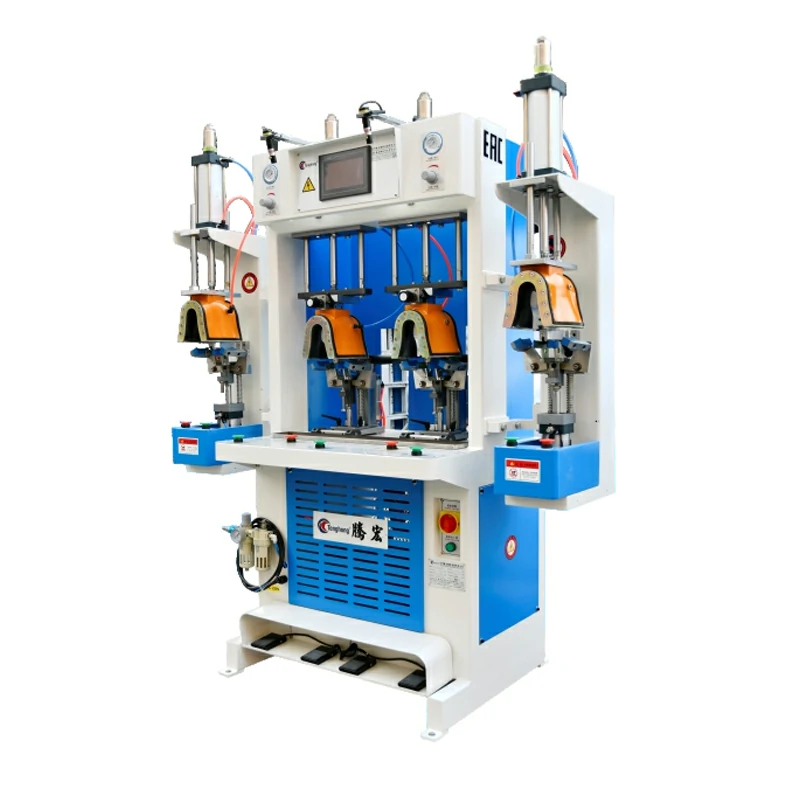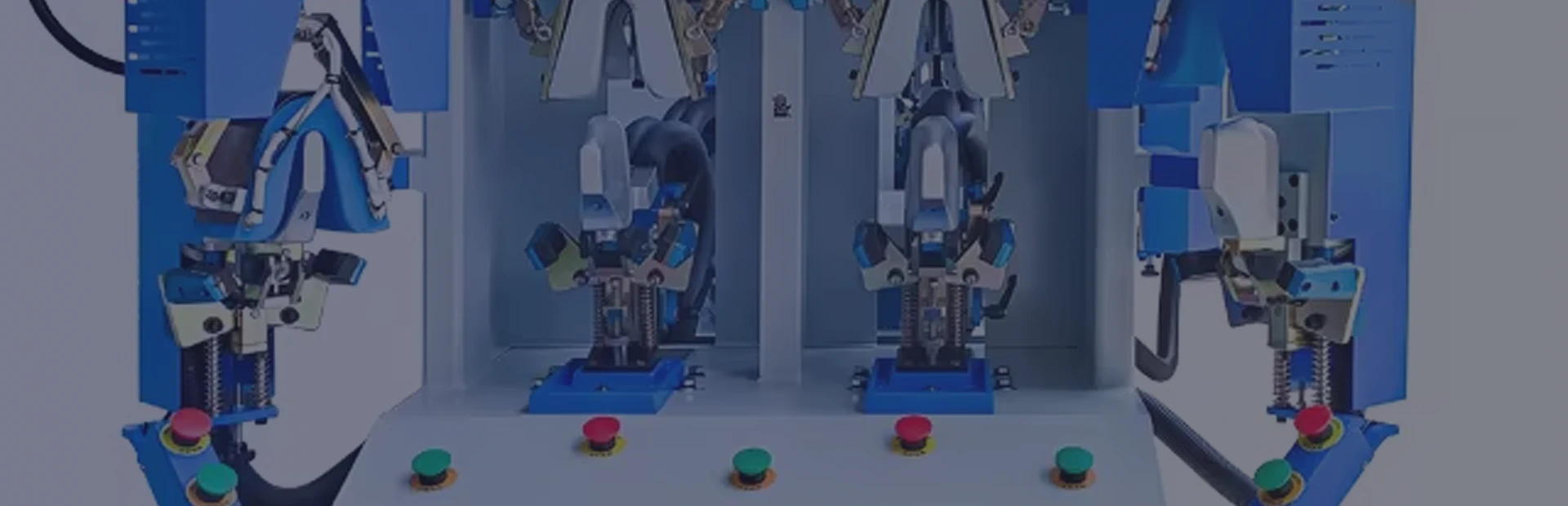
Shoes are still made piece by piece, but the work no longer has to move from station to station at the speed of a person. A fully automated shoe production line arranges cutting, lasting, sole attaching and assembly so that each stage stores its own settings, reports its own cycle data, and hands the workpiece to the next stage without waiting. The result is less manual handling, fewer timing-driven defects, and an output record that the management team can actually read. The rest of this guide explains what an automated line really does, which stations to automate first, and how to plan the move without overcommitting the factory.
What a Fully Automated Shoe Production Line Actually Does
In a manual workshop, every step is keyed to the operator’s pace: pieces are cut one at a time, panels are sewn by hand, lasting waits for someone to position the upper, and sole attaching depends on a press being watched. A fully automated shoe production line replaces that hand-driven chain with stations that store their own settings, report their own cycle data, and hand work to the next station without waiting for a person. The line still produces shoes; what changes is who carries the timing information between stations.
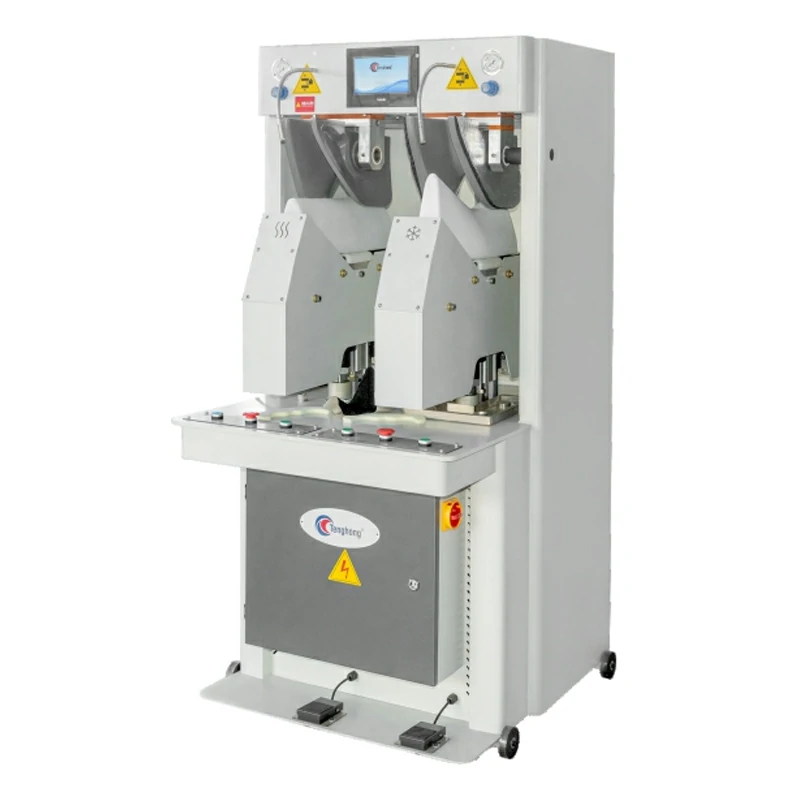
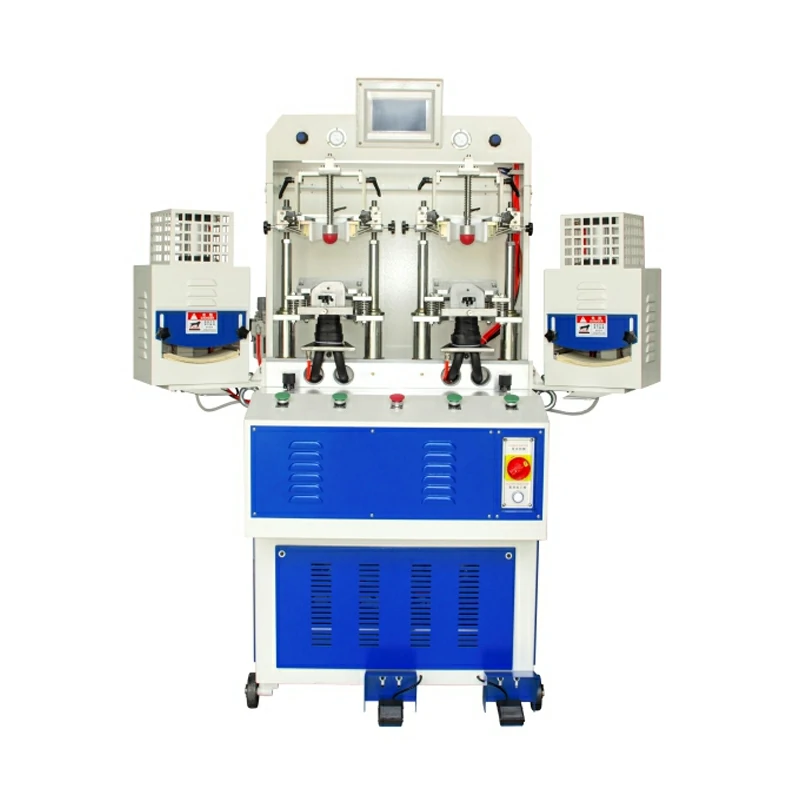
Day to day, the visible difference is consistency. The preparation and forming stages run through a cutting machine, a moulding machine, a sewing machine, and a roughing and polishing station that read the same file for every pair. The lasting stages then pull the upper over the last, first through a toe lasting machine, then shaped further by a side and heel seat lasting machine and finished at the heel seat lasting machine, so the upper is wrapped in three coordinated pulls instead of one hand judgement call. The sole attaching pressing machine then bonds the outsole under logged pressure, time and temperature, which is what turns sole attaching from a craft step into a recordable one.
The Four Stages That Become Automated
Looking across a typical shoe, four broad stages are where automation pays back first:
- Preparation and forming. The upper parts are cut, the last is shaped, the panels are sewn, and the lasting edge is roughed and polished. Automating these steps removes the most operator-dependent movements from the line and gives the lasting stations a consistent input.
- Lasting. The upper is pulled over the last in three coordinated pulls. Because each pull depends on the one before it, automating the whole lasting cluster removes the timing drift that hand lasting introduces.
- Sole bonding. The outsole is attached under controlled pressure and temperature. Recording the press cycle turns sole attaching from a craft step into a repeatable one, which is exactly what certification and warranty programs require.
- Line-level integration. The four stages above are connected by a conveyor, a job-tracking system, or a higher-level MES. Integration is what turns a row of automated stations into a production line.
Which shoe categories benefit most? In practice, a goodyear shoes production line, a leather shoe production line, a safety shoes production line, a sneaker production line, and a high-heel women shoes production line each start from the same four-stage backbone and add category-specific fixtures or last shapes.
How to Plan a Move Toward Full Automation
A full line is rarely a single decision; it is a sequence of decisions that should follow a clear plan.
- Map the current line. Walk one pair of shoes from raw material to packed carton and write down which stations create queue, which depend on a single skilled operator, and where defects usually appear.
- Pick the bottleneck station first. In most factories it is lasting or sole attaching. Replace that station with a programmable equivalent that stores settings and reports cycle data, and confirm the operator can read the new logs before adding the next station.
- Decide whether to retrofit or to buy new. Retrofits make sense when the surrounding stations still have life in them; new equipment makes sense when the upstream station is the real constraint or when the new machine brings data formats the rest of the line cannot read.
- Define data compatibility before signing the purchase order. An automated station is only as useful as its connection to the MES or job-tracking system. Confirm the data format, the cycle rate, and the failure modes that will be reported upward before the line is paid for.
- Run a pilot pair before scaling. Make ten pairs on the new station, compare them against the baseline in output and defect rate, and only then decide whether the next station should follow.
Typical factories spend three to six months on the audit, the pilot, and the operator training before the line is running at full speed. The audit is rarely optional: it is what tells you whether the real constraint is equipment, layout, or operator skill.
Conclusion
As outlined above, a fully automated shoe production line is less a single product than an arrangement: programmable preparation and forming stations, a three-pull lasting cluster, a logged sole attaching press, and the line-level integration that ties them together. Lasting and sole bonding receive attention first because both are machine-driven stages that gain directly from recorded cycles and shared data. Before signing a purchase order, the factory should map the current line, pick the real bottleneck, decide between retrofit and new equipment, and confirm that the chosen station can speak the same data format as the rest of the line. Once one station proves its value on a pilot run, the same logic can be extended station by station.
If you are evaluating a move toward full automation, start the conversation with the shoe types you run, your current output, and the stations you already trust. TengHong’s engineers can review your existing line layout, suggest which station to automate first, and configure a production line around your factory. Describe your application requirements to TengHong’s engineering team and compare configurations before you commit.
FAQ
What is a fully automated shoe production line?
A fully automated shoe production line is a connected sequence of stations for cutting, lasting, sole attaching and assembly where each station stores its settings, reports its cycle data, and hands work to the next station without depending on a person to carry the timing information.
Which stages of shoemaking are automated first?
Preparation and forming, lasting and sole attaching are usually automated first. They are machine-driven, run many cycles per shift, and benefit most from recorded cycle data and shared settings.
Is a fully automated line only for large factories?
No. A small factory can start with one bottleneck station, run a pilot, and add stations one at a time. Full-line automation is more common in large factories, but the underlying decision is the same: replace the station that actually limits output first.
How long does it take to install a fully automated line?
Typical installations take three to six months from the first line audit to running at full speed. The audit, the pilot run, and the operator training are the steps that determine the schedule, not the machine delivery time alone.