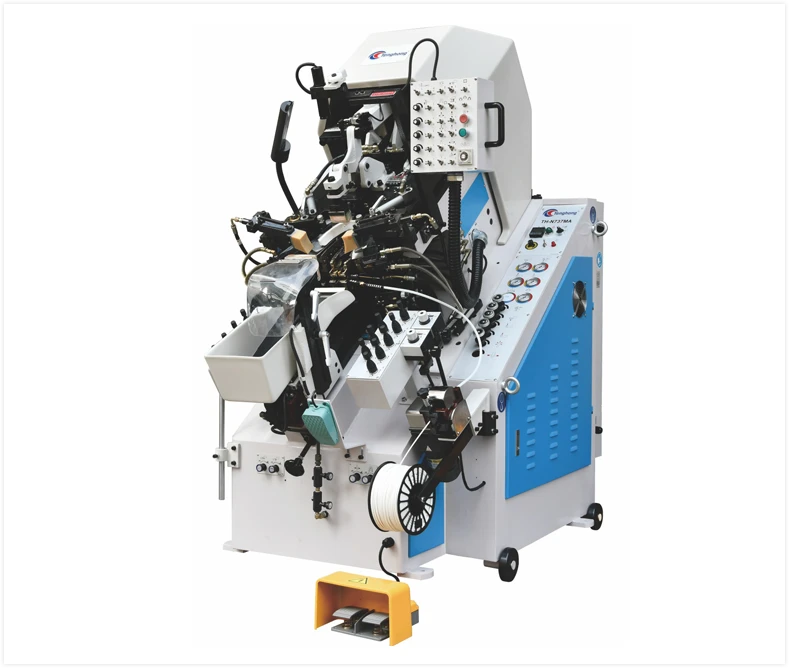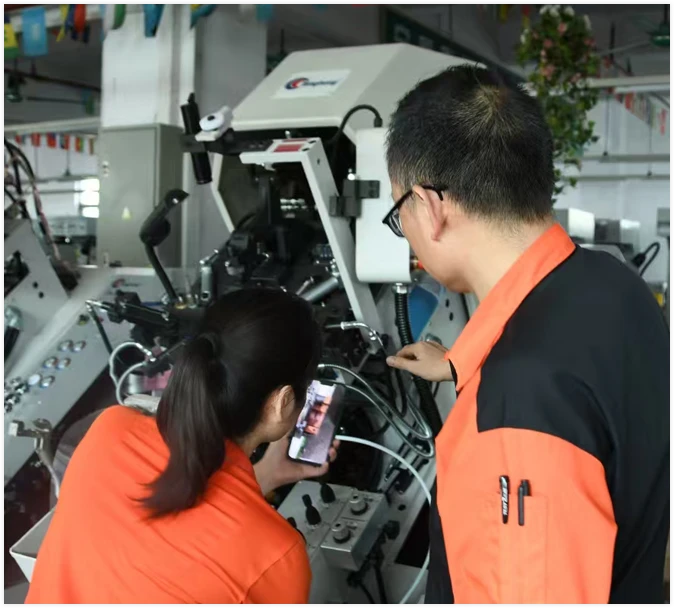
Selecting between a fully automatic and a semi-hydraulic side and heel seat lasting machine comes down to three technical variables: order batch volume, upper material elasticity, and the availability of dedicated maintenance technicians. Fully automatic systems excel in high-volume, standardized production lines where programmable servo movement minimizes cycle times and removes operator skill dependencies. Semi-hydraulic machines deliver durable, cost-effective clamping and lasting force for small-to-medium batch runs or facilities handling stiff, thick leathers that benefit from tactile operator adjustments.
This guide evaluates how both lasting architectures function, how they handle different shoe uppers and lasts, their true maintenance demands, and how factory managers can pick the right configuration for their assembly lines.
Precision at the Heel: Why Side and Heel Seat Lasting Dictates Line Efficiency
The heel seat and waist (shank area) form the structural backbone of footwear assembly. If the upper tension across the featherline is uneven, or if the wipers fail to flatten the lasting margin smoothly against the insole, downstream operations suffer immediately. Misaligned heel seats cause crooked heel attachments, sole delamination, and inconsistent topline collars that fail factory quality checks.
| Stage in Assembly Sequence | Production Focus | Quality Impact on Final Shoe |
| Stage 1: Toe Lasting | Front upper tensioning & vamp alignment | Prevents toe cap twisting and asymmetry |
| Stage 2: Side & Heel Seat Lasting (Critical Tension & Flattening Zone) | Waist featherline pulling, heel counter band wrapping & margin wiping | Directly dictates heel vertical alignment, shank fit, and margin flatness for bonding |
| Stage 3: Heat Setting & Bottom Roughing | Moisture removal, upper shape locking & surface preparation | Exposes bonding fibers; compromised if margins are bunched |
| Stage 4: Sole Attaching & Pressing | Adhesive activation and pneumatic/hydraulic sole press | Fails prematurely if heel seat seating is irregular |
In modern footwear production, lasting bottlenecks frequently occur at this station. Plant managers must balance automated throughput against flexibility:
- Edge wiping accuracy: Wiping tools must push the upper material tightly over the last contour without creating bunching or tears.
- Tension distribution: Synthetic knits, structured microfibers, and natural leathers stretch under different force profiles.
- Line synchronization: The lasting cycle must match upstream toe lasting and downstream sole pressing to maintain uniform takt times.
Choosing the proper machine drive mechanism directly impacts how well a factory controls these variables under tight shipping schedules.
Core Engineering Differences: Fully Automatic vs. Semi-Hydraulic Systems
The fundamental distinction between these two machine types lies in how clamping, pulling, and wiping forces are generated, synchronized, and adjusted.
| Architecture Dimension | Fully Automatic Systems | Semi-Hydraulic Systems |
| Primary Controller | Digital PLC / Microprocessor with visual HMI | Foot pedal interlocks and manual directional valves |
| Actuation System | Multi-axis servo drives and precision pneumatic actuators | Electric motor driving an integrated hydraulic pump |
| Pincer Adjustment | Digital recipe recall with independent stroke profiling | Manual hand-wheels, threaded stop collars, and levers |
| Wiper Trajectory | Programmed 2D/3D travel paths with electronic position feedback | Fixed planar stroke bounded by mechanical stop blocks |
| Pressure Regulation | Load-cell monitored electronic/air tension modulation | Hydraulic relief valves governed by fluid pressure setting |
Fully Automatic Systems: Servo Control, Programmable Pincer Sequences, and Sensor Feedback
Fully automatic lasting units replace manual hand-wheel adjustments with microprocessors or programmable logic controllers (PLCs). Pincers are driven by synchronized servo motors or electro-pneumatic actuators that pull the shoe upper according to saved recipe profiles.
- Dynamic tension profiling: The machine adjusts pulling angle and tension mid-stroke to match asymmetric heel shapes (such as left vs. right lasts).
- Automated wiper travel: Heel wipers advance and close based on digital stroke positions rather than physical impact limits.
- Recipe recall: Operators switch shoe styles by selecting a pre-programmed profile on an industrial touchscreen, resetting pincer heights and wiping travel automatically.
Semi-Hydraulic Systems: Fluid Pressure Reliability, Mechanical Limiters, and Operator Control
Semi-hydraulic lasting machinery utilizes an integrated hydraulic pump and oil distribution block to supply raw clamping, band-wrapping, and wiping pressure. Mechanical limiters, threaded stops, and foot-pedal micro-switches govern tool movement.
- Consistent clamping tonnage: Hydraulic fluid delivers steady, vibration-free clamping force, ideal for embedding stiff heel counters into adhesive matrices.
- Manual alignment control: The operator positions the last onto the heel rest, manually actuates side pincers to take up slack, and triggers the hydraulic wiping sequence once alignment is visually confirmed.
- Mechanical adjustment: Adjusting stroke depth, heel band height, and pincer tension requires manual adjustment of valve dials, threaded collars, and position stops.
Technical Architecture Comparison
| Feature / Metric | Fully Automatic Systems | Semi-Hydraulic Systems |
| Primary Drive Mechanism | Multi-axis servo drives / electro-pneumatic | Hydraulic pump with hydraulic cylinders |
| Tool Path Control | Digital profile mapping / PLC parameters | Mechanical limit switches and manual stops |
| Operator Skill Dependency | Low (operator loads last and starts cycle) | Medium-to-High (operator guides tension and placement) |
| Recipe Management | Digital touchscreen recipe storage | Manual tooling adjustment records |
| Force Uniformity | Millimeter-exact, repeatable per program | Dependent on system oil temperature and manual setup |
| Initial Capital Expenditure | Higher capital commitment | Moderate, cost-efficient investment |
Performance Across Shoe Types: Material Handling, Last Contours, and Changeover Speed
Production lines process vastly different materials and geometries. Evaluating how a side and heel seat lasting machine behaves under changing workshop conditions determines whether it helps or hurts daily output.
| Material Category | Fiber Structure & Mechanical Behavior | Primary Lasting Challenge | Preferred Equipment Architecture |
| Natural Leather (Calfskin, Full Grain) | Irregular fibrous grain; variable stretch across belly and spine cuts | Requires sensitive tactile feedback to avoid grain rupture | Semi-Hydraulic or advanced servo with tension sensing |
| Synthetic Microfibers & PU | Uniform density; sharp, predictable tensile limits | Risk of edge tear under sudden shock or uneven pull | Fully Automatic (precise pincer stroke limits) |
| Engineered Knits & Woven Uppers | High elasticity; stretch deformation under localized load | Maintaining collar symmetry without distortion | Fully Automatic (multi-stage progressive clamping) |
| Heavy Split / Work Boot Leathers | High thickness, stiff temper; dense counter materials | Demands continuous, unyielding bedding pressure | Semi-Hydraulic (unyielding continuous fluid force) |
Handling Diverse Upper Materials: Leather vs. Synthetic Textiles
- Full-grain and corrected leathers: Natural hides feature variable elasticity across the flank and backbone cuts. Semi-hydraulic machines allow seasoned operators to “feel” the pull, adjusting pedal timing to avoid grain cracking while bedding the leather securely over the shank. Conversely, fully automatic units handle leather effectively only when equipped with programmable multi-stage tension settings that prevent localized over-stretching.
- Synthetic microfibers and engineered mesh: Synthetics possess uniform tensile strength but lower elongation thresholds before tearing. Fully automatic systems provide the exact millimeter-controlled pincer travel required to pull synthetics tightly to the last without tearing seams or warping bonded reinforcement layers.
Tooling Adjustments and Tool-Free Changeover Times
For factories running small batches, machine downtime during style changeovers can erase efficiency gains.
- Fully automatic units allow rapid changeovers between pre-programmed left and right shoes, as well as digital heel-height resets. However, physical tooling changes—such as replacing custom heel bands or side-lasting wipers for radically different lasts—still require tool change downtime.
- Semi-hydraulic units demand 15 to 30 minutes of manual setup per style change to calibrate pincer opening clearances, wiper heights, and limit blocks. For plants running long production batches of uniform safety shoes or athletic sneakers for weeks at a time, this manual setup time becomes negligible across total volume.
Application Suitability Matrix
| Footwear Category | Typical Material / Construction | Best-Fit Machine Architecture | Practical Selection Rationale |
| Men’s Dress & Goodyear Welt | Heavy calfskin, stiff counters, leather boards | Semi-Hydraulic | Sustained hydraulic wiping pressure beds heavy leather lasting margins firmly. |
| Athletic & Running Shoes | Mesh, synthetic overlays, EVA insoles | Fully Automatic | Rapid, repeatable digital cycles match high-speed assembly line takt times. |
| High-End Women’s Pumps | Thin kidskin, steep heel-to-waist angles | Fully Automatic | Requires asymmetric, programmable pincer paths around deep shank contours. |
| Heavy Safety & Utility Boots | Oiled leather, steel/composite shanks | Semi-Hydraulic | Mechanical durability and high structural pressing force seat thick materials without servo strain. |
The TCO Equation: Initial Capital, Operator Skill Requirements, and Maintenance Downtime
Procuring lasting equipment involves looking beyond the purchase invoice. Long-term operating expenditures often outweigh initial machinery costs.
| Cost & Operational Factor | Fully Automatic Configuration | Semi-Hydraulic Configuration |
| CapEx (Initial Machinery Purchase) | Higher upfront capital expenditure | Moderate to low upfront investment |
| Operator Skill & Training | Short onboarding; low dependence on master operators | Requires seasoned technicians with tactile experience |
| Ongoing Labor Cost (OpEx) | Lower overall labor overhead per 1,000 pairs | Higher ongoing wage expenditure for specialized operators |
| Downtime Profiles | Sensor cleaning, encoder checks, software updates | Hydraulic oil flushes, filter servicing, seal replacements |
| Spare Parts Availability | Proprietary electronics, servo cards, sensors | Readily sourced standard hydraulic seals, hoses, and valves |
Labor Dependencies: Skilled Operators vs. Automated Presets
- Semi-hydraulic machinery: The consistency of the finished heel seat depends directly on the person running the machine. In regions facing footwear labor shortages or rising operator turnover, relying on skilled workers creates production bottlenecks.
- Fully automatic machinery: Once the engineering team programs the optimal pull sequence and wiper trajectory, an entry-level worker can load the last, press the dual optical start buttons, and produce uniform results. This shifts technical dependency from floor labor to tooling engineers.
Preventive Maintenance: Hydraulic Seals vs. Electronic Calibration
- Semi-hydraulic wear profiles: Hydraulic units require clean, cool oil to function correctly. Routine maintenance centers on replacing degraded hydraulic fluid, servicing inlet strainers, monitoring oil temperatures during multi-shift operations, and replacing nitrile cylinder seals that harden over time. Fluid leaks can contaminate shoe uppers if wipers and pincer assemblies are not inspected daily.
- Fully automatic wear profiles: These machines eliminate messy hydraulic circuits in favor of servomotors, ball screws, linear guides, and pneumatic manifolds. Maintenance teams must inspect linear guide lubrication, clean optical sensors of adhesive fumes and dust, and verify encoder calibrations to prevent tool-path drift.
Decision Matrix: Which Configuration Matches Your Factory Profile?
Use this decision matrix to evaluate your facility’s operational structure against machinery requirements.
| Operational Evaluation Parameter | Factory Assessment Criteria | Recommended Technology Route | Primary Operational Justification |
| Daily Production Target | Exceeds 1,200 pairs/line per 8-hour shift | Fully Automatic | Minimizes per-cycle dwell time and matches fast-paced conveyors |
| Style & Size Fragmentation | High variety (frequent short runs of under 300 pairs) | Fully Automatic | Instantaneous digital recipe recall slashes daily tooling downtime |
| Upper Material Profile | Predominantly heavy oiled leathers or safety boots | Semi-Hydraulic | High hydraulic tonnage presses thick layers without motor stall |
| Floor Labor Availability | High operator turnover or scarce skilled lasting masters | Fully Automatic | Pre-programmed cycle parameters eliminate human variability |
| In-House Maintenance Staff | Mechanical/hydraulic technicians; no PLC engineers | Semi-Hydraulic | Fluid circuits can be overhauled locally without specialized software |
Factory Profile Analysis
- Profile A: High-Volume Contract Manufacturer (Athletic / Casual)
- Parameters: 1,500+ pairs per shift, strict brand tolerance audits, synthetic upper materials.
- Recommendation: Fully Automatic System. Digitally stored parameters guarantee identical heel profiles across multiple production lines, ensuring international compliance.
- Profile B: Traditional Leather Footwear or Work Boot Specialist
- Parameters: 400–800 pairs per shift, thick oil-tanned leathers, long production runs per model.
- Recommendation: Semi-Hydraulic System. The raw hydraulic clamping force combined with mechanical longevity provides dependable performance without the complexity of digital controllers.
- Profile C: Fast-Fashion or Quick-Turnaround Regional Factory
- Parameters: Small batches (50–200 pairs per order), frequent weekly pattern resets, medium budget.
- Recommendation: Hybrid Evaluation. If technicians can set up recipes quickly, an automated system speeds up short-run cycles. However, if capital is constrained, a semi-hydraulic machine paired with seasoned operators remains the more economical choice.
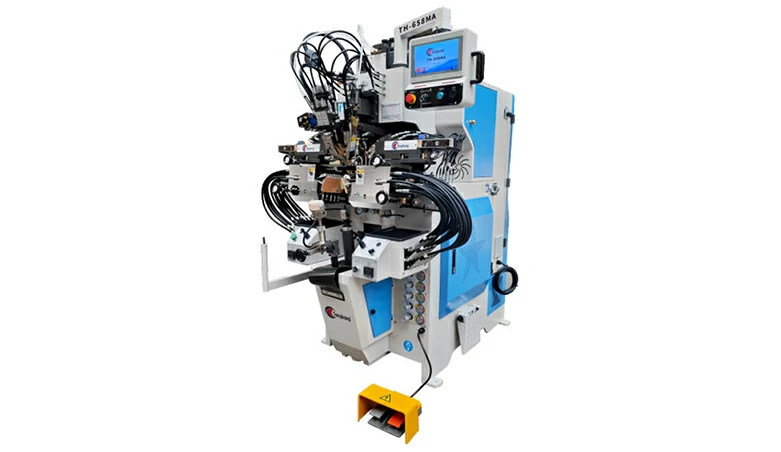
To review machine footprints, technical configurations, and pincer layouts, examine the specifications available in the Tenghong side and heel seat lasting series.
Pre-Procurement Checklist: Essential Technical Questions for Machine Vendors
Before issuing a purchase order for a lasting unit, technical procurement teams should confirm these operational requirements with machine suppliers:
- Upper Lasting Margin Compatibility: What is the minimum and maximum lasting allowance (in millimeters) supported by the side pincer travel range?
- Heel Band and Wiper Geometry: Are wiper plates customized to proprietary last contours, or do they use universal quick-adjust radiuses?
- Thermal Management (Hydraulic Units): Does the semi-hydraulic machine include an integrated oil radiator or cooling coil to prevent pressure drops during 16-hour dual-shift operations?
- Program Storage and Firmware Updates (Automatic Units): How many unique shoe recipes can the PLC store internally, and can profiles be backed up or transferred via industrial USB/Ethernet?
- Safety Compliance and Emergency Stops: Are optical light curtains, dual ergonomic palm buttons, and rapid hydraulic dump valves fitted as standard equipment?
- Utility Connections: What are the exact pneumatic bar requirements, hydraulic oil grades, and electrical power demands (voltage, phase, amperage) required to support line installation?
Key Takeaways
- Mechanism dictates performance: Fully automatic machines utilize programmable electronic/pneumatic drives to deliver repeatable tool travel, whereas semi-hydraulic machines rely on oil pressure and mechanical stops for high-tonnage clamping.
- Material dictates selection: Synthetic textiles and complex shoe lasts benefit from the precise, recipe-driven pincer control of automated machines. Heavy leathers and traditional welt constructions remain well-suited to the tactile adjustments of semi-hydraulic units.
- Labor costs balance CapEx: While semi-hydraulic units reduce upfront capital expenditure, they require higher-wage, experienced operators. Fully automatic units carry a higher purchase price but reduce operator training time and floor dependencies.
- Maintenance disciplines differ: Semi-hydraulic systems demand regular oil changes, valve checks, and seal maintenance; automated systems demand clean, dust-free electrical cabinets, sensor care, and guide lubrication.
Frequently Asked Questions (FAQ)
Can a semi-hydraulic side and heel lasting machine achieve the same bond strength as a fully automatic unit?
Yes. Bond strength is determined by wiper temperature, adhesive reactivation, lasting margin pressure, and insole contact time. When properly adjusted by an experienced operator, a semi-hydraulic machine provides sufficient hydraulic pressure to create an exceptional bond. However, fully automatic units offer greater cycle-to-cycle repeatability over thousands of consecutive pairs by eliminating operator fatigue.
How much downtime is typical when switching shoe lasts on an automated machine?
On fully automatic models, digital recipe recall adjusts pincer stroke limits, wiper travel, and heel band positioning within 1 to 3 minutes. If the new shoe style requires physically swapping wiper plates or custom heel bands for radical shape changes, mechanical changeover takes roughly 10 to 20 minutes, depending on the tool design and operator training.
What are the primary failure points in hydraulic systems for footwear lasting?
The most frequent issues in hydraulic lasting machines stem from oil degradation. Over time, elevated operating temperatures thin the hydraulic fluid, resulting in reduced wiping pressure and inconsistent clamping. Secondary issues include particulate contamination clogging proportional control valves, internal cylinder seal blow-by, and loose mechanical stop collars caused by prolonged machine vibration.
Does a fully automatic side and heel lasting machine require specialized software training?
Most modern automated lasting machines utilize graphical industrial touchscreens with visual last diagrams. Machine operators require only basic instruction to load parts and cycle profiles. However, factory maintenance personnel or process engineers will need training to program new pincer stroke distances, pressure curves, and wiper advance sequences for incoming shoe collections.