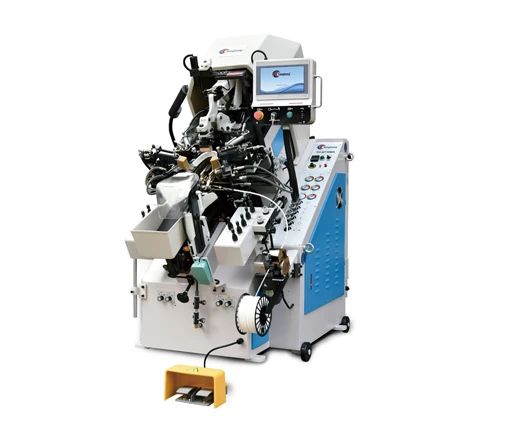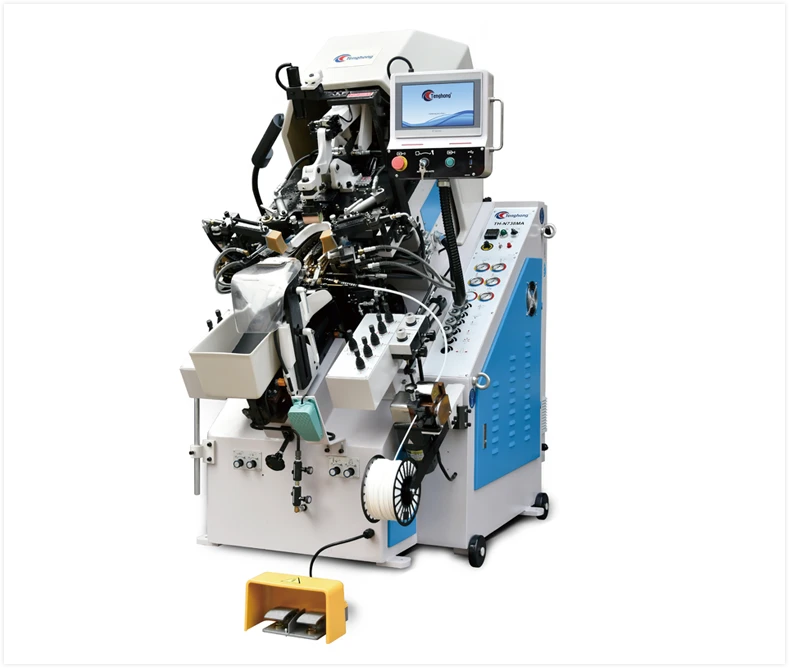
Selecting a reliable Toe Lasting Machine supplier requires verifying actual machining capabilities, component traceability, and live material testing rather than relying on catalog specifications. While technical brochures from different vendors often list similar cycle speeds and operating features, production-floor performance depends on structural rigidity, hydraulic stability, and wiper synchronization.
A structured footwear machinery factory audit focuses on four core evaluation areas:
- In-house manufacturing vs. trading operations: Verifying CNC machining capacity and structural frame fabrication.
- Component traceability and assembly standards: Inspecting hydraulic valves, PLC electronics, and wear-resistant lasting parts.
- Factory Acceptance Testing (FAT): Running live tests using actual shoe lasts, insoles, and upper materials.
- Customization and after-sales readiness: Confirming engineering adaptation, spare parts stock, and technical documentation.
This guide provides an engineering-focused factory audit checklist for footwear factory procurement managers, production directors, and equipment distributors conducting on-site or live video supplier evaluations — the commercial fundamentals are covered in our companion guide on what to check before buying shoe making machinery from China.
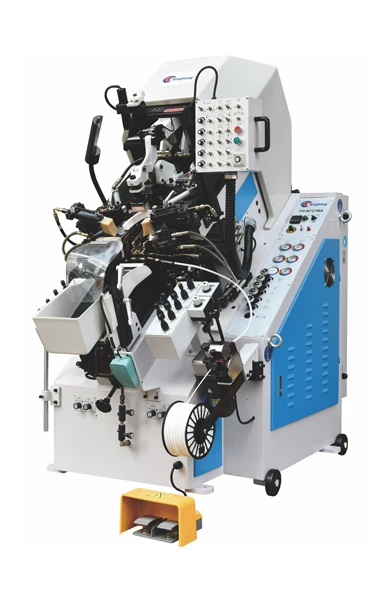
Step 1: Verifying Manufacturing Capabilities vs. Trading Operations
A true shoe lasting machine manufacturer controls its core mechanical fabrication, whereas basic assemblers or trading intermediaries rely entirely on outsourced parts and third-party assembly workshops. Auditing the machining and fabrication floor reveals whether a supplier can maintain long-term geometric accuracy across production batches.
When evaluating a facility, inspect the machine shop before looking at finished equipment in the showroom. High-precision lasting depends on rigid machine frames that resist deflection under repeated hydraulic clamping forces, as well as accurately milled wiper tracks and pincer mounts.
Comparing True Manufacturers and Basic Assemblers
| Evaluation Dimension | True Machinery Manufacturer | Basic Assembler or Trading Company |
|---|---|---|
| Machining Equipment | Operates in-house CNC machining centers, milling machines, and surface grinders for critical structural and moving parts. | Lacks heavy metalworking equipment; relies entirely on external job shops for frames and mechanical subassemblies. |
| Frame Fabrication | Maintains dedicated welding bays and stress-relief procedures to prevent frame warping over multi-year operation. | Purchases pre-welded frames with no documented flatness or alignment inspection prior to assembly. |
| Engineering & Drawings | Holds complete 3D CAD assemblies, hydraulic schematics, and bill-of-materials (BOM) revision control. | Works from static supplier manuals without internal engineering capability to modify mechanical geometry. |
| Incoming Quality Control (IQC) | Uses calibrated micrometers, hardness testers, and inspection logs to verify incoming machined parts. | Assembles parts directly out of shipping crates without dimensional verification. |
| Live Video Audit Response | Can walk seamlessly from the office to raw material storage, CNC bays, assembly lines, and testing areas in one continuous camera feed. | Restricts camera views to finished machines or experiences delays when asked to show specific production stations. |
If conducting a remote video audit, request an unscripted walkthrough starting from the raw steel and casting storage area, moving through the CNC machining floor, and ending at the final assembly bays. Ask the engineer to show serial number stamping on machine frames and match them against active production work orders.
Step 2: Core Component Traceability and Assembly Standards
The operational lifespan and repeatability of an automatic toe lasting machine depend directly on the quality of its hydraulic, electrical, and mechanical subsystems. Substandard solenoid valves or unshielded control wiring cause pressure drift, inconsistent lasting tension, and frequent unscheduled downtime.
During the audit, ask the assembly supervisor to open the electrical cabinet and hydraulic power pack of a machine currently under construction. Verify that the installed components match the brand specifications quoted in the commercial proposal.
Core Subsystem Audit Checklist
Hydraulic System Integrity
- Valves and Pumps: Check brand markings and serial plates on directional solenoid valves, proportional pressure valves, and hydraulic pumps. Request procurement invoices or distributor certificates to confirm authenticity.
- Manifold and Piping Layout: Inspect hydraulic manifold blocks for clean machining and verify that high-pressure hoses are routed cleanly without sharp bends, chafing points, or unsupported spans.
- Thermal Management: Confirm the presence of an oil cooling system (air-cooled or water-cooled, depending on the machine configuration) to prevent oil viscosity breakdown during continuous multi-shift operation. The upstream design choice between hydraulic and servo drive architectures is analyzed in our hydraulic vs. servo toe lasting machine comparison.
Electrical and Control Systems
- PLC and HMI Hardware: Verify the manufacturer and model series of the Programmable Logic Controller (PLC) and touchscreen Human-Machine Interface (HMI) — the same control hardware our calibration guide walks through in detail.
- Cabinet Wiring Standards: Look for neatly labeled wires inside DIN-rail ducts, proper grounding bars, and physical separation between high-voltage power lines and low-voltage sensor signals.
- Safety Interlocks: Check dual-hand start buttons, emergency stop circuits, and light curtains or physical guards around the wiper and toe-band zones.
Mechanical Lasting Assemblies
- Wipers (Sweeping Blades): Inspect the surface finish and edge geometry of the left and right wipers. Smooth, hardened surfaces prevent scratching delicate leather or synthetic uppers during the lasting sweep.
- Pincers (Grippers): Examine the jaw serrations and pivoting linkages of the pincer assembly — pincer count and articulation differ across configurations, as covered in our 7-pincer vs. 9-pincer comparison. Pincers must grip the upper material firmly without tearing or slipping under tension.
- Toe Band and Hold-Down Pad: Check the wear resistance and contour adaptability of the toe band and heel/last support mechanisms.
Reviewing modern automatic toe lasting machine configurations before conducting your factory visit helps establish a clear technical baseline for comparing hydraulic layouts, pincer arrangements, and cement delivery systems across shortlisted suppliers.
Step 3: On-Site Factory Acceptance Testing (FAT) Protocols
A static inspection confirms build quality, but only a structured Factory Acceptance Test (FAT) proves that a toe lasting machine can produce wrinkle-free toe profiles on your specific footwear styles. Never sign off on final shipment based solely on a brief dry-run demonstration.
Before traveling to the factory or scheduling a live FAT broadcast, ship a representative batch of your actual production materials to the supplier—including left and right shoe lasts, attached insoles, heel counters, and cut uppers across your hardest-to-last materials.
Three-Stage FAT Execution Process
Stage 1: Cold Inspection and Parameter Setup
- Verify that all pneumatic and hydraulic pressure gauges hold steady without creeping or leaking when pressurized at standstill.
- Check that the HMI parameter interface allows operators to store and recall recipe settings — disciplined pincer pulling sequence and wiper height calibration stored as recipes is what makes changeovers repeatable — for different shoe sizes and styles.
- Test every emergency stop button and safety sensor to confirm immediate hydraulic pressure release and motion halt.
Stage 2: Continuous Dry-Cycle Endurance Run
- Operate the machine continuously in automatic cycle mode for an extended period (the exact duration should be agreed upon in the technical protocol based on your shift requirements).
- Monitor hydraulic oil temperature rise, pump noise levels, and solenoid valve switching consistency.
- Observe whether the wiper closing path and pincer retraction timing remain repeatable without mechanical binding or hesitation.
Stage 3: Live Material Lasting and Bond Evaluation
- Run lasting cycles on multiple shoe types relevant to your factory—such as structured men’s dress leather, flexible athletic mesh, thick safety boot uppers, or high-heel women’s lasts.
- Inspect the lasted toe feather line: Check for uniform upper tension, zero pleats or wrinkles around the toe curve, and symmetric alignment between the left and right shoes.
- Evaluate the hot-melt cement system: Verify clean glue cutoff without stringing, consistent adhesive bead placement along the insole margin, and firm bond adhesion once the wipers retract — the performance gap between automated and hand-applied glue is quantified in our automatic vs. manual cementing comparison.
- Test changeover speed: Time how long it takes the technician to adjust the machine from one shoe size or last profile to another.
Step 4: Customization, Spare Parts Inventory, and After-Sales Support
Standard machine geometry rarely fits every shoe last out of the box, particularly for factories producing specialized safety footwear, orthopedic shoes, or sharp-pointed fashion lasts (for rigid constructions, pre-forming the upper on a moulding machine before lasting also reduces rejection risk). Furthermore, international buyers face severe production losses if a minor wear part fails and requires weeks of air freight to replace.
Evaluate the supplier’s engineering responsiveness and post-delivery infrastructure before finalizing commercial terms.
Essential Procurement and Support Verification Items
- Last-Specific Mechanical Adaptation: Confirm whether the engineering team can modify pincer positioning, wiper curvature, or toe-band profiles based on 3D scans or physical samples of your shoe lasts.
- Dedicated Spare Parts Warehouse: Walk through the supplier’s spare parts storage room. Verify physical stock levels of critical wear items, including toe bands, wiper blades, pincer jaw inserts, heating cartridges, hydraulic seals, and proximity sensors.
- Recommended Spare Parts Package: Require an itemized spare parts list categorized by expected replacement intervals (e.g., 1-year consumables vs. 3-year maintenance parts) with locked unit pricing.
- Technical Documentation Package: Ensure the machine ships with complete English-language operation manuals, electrical wiring diagrams, hydraulic circuit schematics, and exploded mechanical parts catalogs with part numbers.
- Remote Diagnostic Capability: Confirm whether the electrical control system supports remote troubleshooting or if the supplier maintains dedicated English-speaking technical engineers for video-guided fault resolution.
- Warranty and Root-Cause Handling: Clarify warranty coverage terms for major assemblies versus wear consumables, along with standard dispatch lead times for replacement components.
Complete Toe Lasting Machine Factory Audit Scorecard
Use the scorecard below to standardize evaluations across multiple candidate suppliers during on-site visits or video audits. Scoring each checkpoint consistently prevents impressive showroom appearances from masking underlying manufacturing weaknesses.
| Audit Category | Key Verification Checkpoint | Required Evidence | Critical Red Flag |
|---|---|---|---|
| Manufacturing Base | In-house CNC machining and frame fabrication | Live observation of active machining centers and welding bays | Refusal to show machining areas or reliance on unlabeled subassemblies |
| Quality Control | Incoming part inspection and assembly logs | Calibrated gauges, hardness test records, and machine build sheets | Missing QC checklists or visible surface rust/burrs on internal parts |
| Hydraulic & Electric | Brand authenticity and clean routing | Component serial plates, procurement records, and organized wiring ducts | Unbranded solenoid valves, messy loose wires, or oil seepage on test units |
| Lasting Performance | Wrinkle-free toe profile on buyer’s own materials | Physical inspection of lasted sample pairs across multiple sizes | Visible pleating on curved toes, upper tearing, or inconsistent glue cutoff |
| Engineering Depth | Custom tooling and last adaptation capability | Examples of modified wipers/pincers and CAD engineering workflow | Inability to explain how wipers or pincers adapt to different last heights |
| After-Sales & Parts | Physical spare parts inventory and English manuals | Bin-stocked warehouse shelves and sample English schematic manuals | No dedicated parts warehouse or manuals available only in local language |
Automatic Disqualification Red Flags
Regardless of competitive pricing or quoted delivery times, treat the following findings as immediate disqualification criteria:
- Unwillingness to perform live material testing: Any supplier that refuses to run lasting trials using your actual shoe lasts and upper materials prior to final payment.
- Mismatched component brands: Substituting unbranded or lower-tier hydraulic valves and PLC modules in place of the brands specified in the quotation without written buyer approval.
- Absence of electrical and hydraulic schematics: Shipping industrial footwear machinery without complete, accurate circuit diagrams required by your factory maintenance team.
Evaluating candidates against Tenghong Toe Lasting Machine solutions provides a practical reference point for structural build standards, control accessibility, and testing transparency before you commit capital to a production line.
Key Takeaways
- Look past brochure specifications: Two toe lasting machines with similar cycle ratings can perform very differently depending on frame rigidity, wiper metallurgy, and hydraulic valve stability.
- Verify the machine shop first: Confirm in-house CNC machining, frame stress-relief, and incoming inspection logs to distinguish true manufacturers from basic assemblers.
- Audit open cabinets and manifolds: Inspect hydraulic blocks, solenoid valve brands, and electrical wiring separation directly on the assembly floor rather than relying on spec sheets.
- Mandate live material FAT: Always test the machine using your own shoe lasts, insoles, and upper materials to verify feather-line flatness, pincer grip, and hot-melt cement cutoff.
- Lock in spare parts and schematics: Require a physical inspection of the supplier’s spare parts inventory and confirm complete English electrical and hydraulic diagrams before shipment.
FAQ: Auditing Footwear Machinery Manufacturers
How long should a toe lasting machine run during a factory acceptance test?
A reliable Factory Acceptance Test should combine an extended continuous dry-cycle run to check hydraulic oil temperature stability with multi-size live material lasting trials. The exact run duration should be agreed upon in writing before the audit based on your factory’s daily shift volume and material complexity.
What samples should buyers send to a toe lasting machine supplier before placing an order?
Send left and right pairs of your primary production shoe lasts (covering both small and large sizes), pre-attached insoles, stiffened heel counters, and cut upper patterns in your most demanding materials—such as stiff full-grain leather, thick safety boot uppers, or elastic synthetic fabrics—along with your standard hot-melt adhesive specifications.
How can overseas buyers verify a shoe machinery factory without traveling?
Buyers can conduct a structured live video audit using an unscripted single-take walkthrough starting from raw material storage through CNC machining, subassembly, and live testing bays. For higher-value orders, combine this live engineering session with an independent third-party inspection agency to verify component serial numbers and witness the Factory Acceptance Test on-site — the full import and pre-shipment inspection workflow is covered in our guide to importing toe lasting machines from China.
Which toe lasting machine components have the highest impact on long-term maintenance costs?
Hydraulic directional and proportional valves, high-pressure seals, wiper blades, toe bands, pincer jaw inserts, and hot-melt glue nozzle assemblies experience the highest mechanical and thermal wear. Confirming standard off-the-shelf valve brands and guaranteed factory stock for mechanical wear parts keeps long-term maintenance predictable — and weighing these running costs against automation savings is exactly what our labor savings vs. equipment amortization ROI analysis covers.